

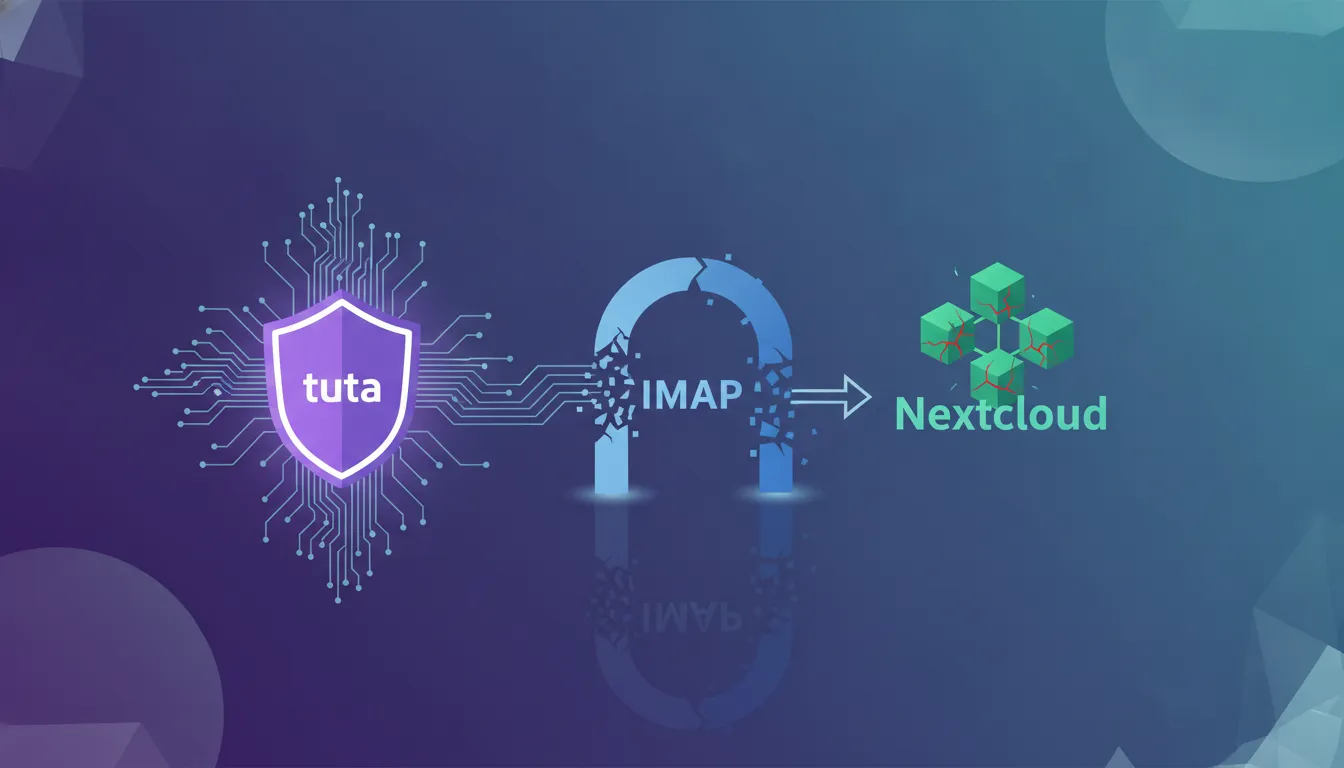
**Security Breach Alert: Tuta Exploits Nextcloud Weaknesses via IMAP Bypass**
In the digital age, where cloud storage has become as essential as electricity, even minor vulnerabilities can have catastrophic consequences. Just last month, a new threat actor named Tuta demonstrated how exploiting a security flaw in Nextcloud through an IMAP bypass could grant unauthorized access to sensitive data—a stark reminder that no matter how robust your system appears, the weakest link often lies outside it.
Imagine this: You store critical business documents on Nextcloud, believing they are safe and secure. Suddenly, you discover someone has accessed them without a password or permission—this is not just a breach; it’s an invasion of privacy and potential theft of intellectual property. The Tuta incident highlights the dire need for continuous vigilance in securing cloud applications.
This vulnerability isn’t limited to Nextcloud alone but serves as a wake-up call for all cloud service providers and users alike. It underscores that traditional security measures, like firewalls or even robust user authentication systems, may not be enough against sophisticated attackers who can exploit unpatched protocols such as IMAP. The lesson here is clear: the landscape of cybersecurity is ever-evolving, and staying ahead requires constant innovation and adaptability.
As we navigate through this complex web of digital threats, it’s crucial to understand that every layer of security is interconnected. A breach in one area can have ripple effects throughout your entire system. Tuta’s exploit serves as a critical lesson for both developers and end-users: the battle against cyber threats requires not just reactive measures but proactive defense strategies.
In our next segment, we’ll delve into how this vulnerability was discovered and what steps you can take to mitigate similar risks in your own cloud environments. Stay tuned!
Understanding the tuta exploit
The recent security vulnerabilities in Nextcloud exposed by the Tuta project highlight significant risks related to IMAP (Internet Message Access Protocol) usage within cloud storage applications. This analysis delves into how Tuta bypasses traditional IMAP security measures, exploiting underlying architectural choices and leading to potential data breaches.
Bypassing imap for security gains
Tuta’s approach to targeting Nextcloud’s reliance on IMAP illustrates a shift in the way attackers can exploit vulnerabilities within cloud applications. By focusing on the email integration features of Nextcloud, Tuta developers have demonstrated that even seemingly secure layers like IMAP are not as robust when integrated with complex systems.
The primary technique involves leveraging weak or misconfigured IMAP servers to gain unauthorized access to user accounts and stored files. This is achieved through a combination of social engineering tactics combined with exploiting known vulnerabilities in the email client libraries used by Nextcloud for syncing contacts, calendars, and emails (N1).
Technical impacts
Architectural choices and security flaws
Nextcloud’s architecture, which integrates with various third-party services including email clients via IMAP, introduces multiple layers of complexity that attackers can exploit. The design choice to leverage external protocols for user interaction creates a surface area where security gaps can be found and exploited.
Concrete solutions
1. **Enhanced Authentication Mechanisms**: Implementing multi-factor authentication (MFA) not only on the Nextcloud application but also within connected services like email clients, can significantly reduce the risk of unauthorized access.
2. **Regular Security Audits**: Conduct thorough security audits focusing on both internal and external integration points to identify potential vulnerabilities early.
3. **IMAP Server Hardening**: Configuring IMAP servers with strong password policies, enabling SSL/TLS encryption for secure communication, and limiting access through IP whitelisting can mitigate risks.
Conclusion
The Tuta project’s findings underscore the importance of a comprehensive security approach that considers all integration points within cloud applications. By addressing these vulnerabilities in Nextcloud’s architecture, users and administrators can better protect their data from sophisticated attacks leveraging weak or misconfigured IMAP servers.
Next steps for security
This development underscores the critical need for continuous security audits and robust patch management in cloud storage solutions. Developers must prioritize secure coding practices and integrate regular vulnerability assessments into their workflows. Tech leaders should invest in advanced threat detection systems and foster a culture of cybersecurity awareness across teams. The evolving landscape demands proactive measures to safeguard user data, ensuring that vulnerabilities are addressed swiftly before they can be exploited.