

Pondicherry: A Journey Through History, Culture, and Souvenirs That Say “Je t’aime”
Pondicherry is not just a city—it is an emotion, a blend of histories and cultures that have been layered over centuries of encounters, conflicts, and collaborations. Today, as travelers walk down the tree-lined boulevards of the French Quarter or watch fishermen casting their nets at sunrise, they are experiencing a unique place where East and West have met, collided, and finally harmonized.
At Low Cost Web Agency, we are proud to have developed hotelpondicherry.com, a travel and booking platform that fills a major gap in the city: a true online guide combined with a souvenir shop. Surprisingly, despite its status as a tourist magnet, Pondicherry has very few quality souvenir stores. Our platform bridges that gap, making it easier than ever to not only plan your trip but also to take home a piece of the city’s spirit through the “Pondicherry, je t’aime” collection—a line of souvenirs designed to celebrate Pondicherry’s charm and identity.
Before diving into the souvenirs themselves, it is important to understand why Pondicherry is so special. To do this, one must look back at its long and layered history.
The Origins of Pondicherry: From Ancient Trade to Colonial Gateway
Long before the French set foot in Pondicherry, the Coromandel Coast was a hub of maritime activity. Ships sailed from here to Southeast Asia, carrying spices, silk, and precious stones. Ancient Tamil kingdoms such as the Cholas and Pandyas maintained active trade links with Rome, Greece, and beyond. Archaeological evidence points to Roman coins and amphorae found along this coast, showing that Pondicherry was already on the global map thousands of years ago.
By the 4th century, the Pallavas had established their influence in the region. Temples such as those in Mahabalipuram, just north of Pondicherry, are a testimony to their architectural and cultural power. Over the centuries, different dynasties including the Cholas, Pandyas, Vijayanagara Empire, and the Nawabs of the Carnatic ruled over this stretch of land.
But everything changed with the arrival of Europeans in India. While the Portuguese, Dutch, and British left their marks, it was the French who truly transformed Pondicherry into the city we know today.
The French in Pondicherry: Conquest, Conflict, and Coexistence
The French East India Company first landed in Pondicherry in 1674, under the leadership of François Martin. They established it as a trading post, but also as a settlement. Unlike the British in Madras or the Portuguese in Goa, the French were determined to build not just a colony but a cultural extension of France itself. Wide boulevards, churches with Gothic spires, and pastel-colored mansions soon rose along the coast.
Yet, the French presence was anything but stable. The wars between France and Britain in Europe spilled into India, making Pondicherry a battlefield multiple times.
-
In 1748, the British besieged Pondicherry but failed to capture it.
-
In 1761, during the Seven Years’ War, the British stormed and destroyed the town, reducing it almost to rubble.
-
In 1765, the Treaty of Paris restored Pondicherry to the French, and it was painstakingly rebuilt.
This cycle of destruction and reconstruction marked the city for centuries. Each time, Pondicherry rose again—proof of its resilience and cultural importance.
A Unique Coexistence: French and Tamil Cultures
Unlike other colonies, Pondicherry became a place of cultural coexistence. The French brought Catholicism, European art, and urban planning. The Tamils brought ancient traditions, Hindu temples, and vibrant Dravidian culture. Instead of one overpowering the other, the two cultures blended.
This coexistence is visible even today:
-
A short walk in White Town reveals bright yellow villas with wrought-iron balconies, standing right next to shrines with garlanded deities.
-
Locals may attend mass in French at the Immaculate Conception Cathedral in the morning and a puja at Manakula Vinayagar Temple in the evening.
-
The cuisine itself is hybrid: baguettes and croissants share the table with idlis, dosas, and spicy curries.
This mixture is what makes Pondicherry unforgettable. And it is also what the souvenirs of the “Pondicherry, je t’aime” collection aim to capture: the spirit of a city that is both French and Indian, modern and traditional.
The Struggle for Independence and Pondicherry’s Place in Free India
When India gained independence in 1947, Pondicherry was still a French territory. For years, debates raged over whether it should remain French or join India. The people of Pondicherry themselves were divided: some cherished their French ties, while others longed for full integration with India.
Finally, in 1954, after prolonged negotiations and public demonstrations, Pondicherry was formally handed over to India. In 1962, it became a Union Territory of India, along with Karaikal, Mahe, and Yanam—the other French settlements along India’s coast.
This unique history gives Pondicherry its distinct legal and cultural status even today. Unlike most Indian states, it retains a visible French heritage, while being fully part of India’s democratic and federal framework.
Sri Aurobindo, The Mother, and the Birth of Auroville
No history of Pondicherry would be complete without mentioning Sri Aurobindo and The Mother (Mirra Alfassa).
Sri Aurobindo, once a revolutionary fighting for India’s independence, settled in Pondicherry in 1910. There, he turned inward, focusing on yoga, philosophy, and spirituality. His vision was to go beyond religion and politics, and to explore the evolution of human consciousness itself.
He was soon joined by Mirra Alfassa, a French spiritual seeker, who became known as The Mother. Together, they founded the Sri Aurobindo Ashram, which remains a center of spiritual practice and research to this day.
In 1968, The Mother launched a bold experiment: Auroville, an international township just outside Pondicherry. Auroville was designed as a place where people from all countries could live together in peace, “beyond religion, politics, and nationality.” Its centerpiece, the Matrimandir, is a golden spherical structure that symbolizes the universal soul.
Today, Auroville attracts thousands of visitors, seekers, and volunteers from around the world. For many, a trip to Pondicherry is incomplete without experiencing the tranquility and vision of Auroville.
The Need for Souvenirs: Capturing Pondicherry’s Spirit
Despite its charm, Pondicherry has a surprising shortcoming: a lack of quality souvenir shops. Tourists often leave the city with memories, photographs, and maybe a seashell from the beach—but little else. Unlike Paris with its Eiffel Tower keychains or Jaipur with its handicraft bazaars, Pondicherry has not fully capitalized on its cultural brand.
This is exactly why hotelpondicherry.com created the “Pondicherry, je t’aime” collection. The goal is not just to sell products, but to allow visitors to take home a meaningful piece of Pondicherry—one that reflects its French-Indian identity, its coastal beauty, and its spiritual depth.
From mugs and magnets to tote bags and posters, every souvenir is designed to be more than just an object. It is a memory you can hold in your hand, a way to keep Pondicherry close even after you leave.
In the coming parts of this article, we will explore these souvenirs in detail, while also guiding readers through everything that makes Pondicherry one of India’s most enchanting destinations.
Pondicherry Through the Ages: From French Settlement to Spiritual Haven
The story of Pondicherry is unlike that of any other city in India. Its history is one of conquests, resistance, and cultural fusion. To understand the spirit of Pondicherry today, one must go back to the days when European powers first landed on the Coromandel Coast.
French Colonization and Lasting Influence
The French East India Company officially established its presence in Pondicherry in 1674, under François Martin. Over the centuries, the city became a hotbed of conflict, as the French fought with the Dutch, the British, and even local kingdoms for control.
The Anglo-French wars of the 18th century saw Pondicherry change hands multiple times. Fort Louis was razed, rebuilt, and razed again. Finally, after the Napoleonic Wars, Britain firmly established dominance in India — yet Pondicherry remained French territory until 1954.
This long period of French rule is still visible today. The White Town district, with its mustard-yellow colonial villas, quiet bougainvillea-draped lanes, and ornate churches, is reminiscent of a European seaside town. Walking here feels like stepping into another era. Cafés serve croissants alongside masala chai, street names are in both Tamil and French, and you can find locals conversing in both languages.
It is this fusion of French refinement and Tamil vibrancy that makes Pondicherry irresistibly charming.
Sri Aurobindo and The Mother: The Spiritual Renaissance of Pondicherry
In 1910, Sri Aurobindo, a freedom fighter turned philosopher and yogi, sought refuge in Pondicherry. He dedicated his life to spiritual practices, integrating yoga, philosophy, and the idea of human evolution into his teachings.
A few years later, Mirra Alfassa, a French woman later revered as The Mother, joined him. Together, they founded the Sri Aurobindo Ashram, which became one of the most respected spiritual communities in the world. The Ashram was not about renunciation but about embracing life as a field for spiritual growth.
Even today, thousands of seekers visit Pondicherry to meditate at the Samadhi of Sri Aurobindo and The Mother inside the Ashram. The space exudes peace, and for many, it is the very heart of Pondicherry.
The Birth of Auroville: A Universal Township
Perhaps the most visionary project associated with The Mother was Auroville, founded in 1968. Situated about 10 km from Pondicherry, Auroville is an experimental township designed as a place where people from all over the world could live in harmony, beyond religion, politics, and nationality.
At the center of Auroville lies the Matrimandir, a golden spherical structure surrounded by gardens. It is not a temple in the traditional sense but a place for silent concentration. The vision of Auroville was revolutionary: a community based on unity, sustainability, and human progress.
Today, Auroville attracts volunteers, spiritual seekers, environmentalists, and innovators from around the globe. From organic farming to renewable energy, from art to handicrafts, Auroville has become a hub of creativity and sustainability.
When visiting Pondicherry, a trip to Auroville is almost mandatory — not only to see the Matrimandir but also to explore the eco-friendly lifestyle and artistic workshops that flourish there.
Pondicherry Today: Where the Past Meets the Future
The modern identity of Pondicherry is built on this unique blend:
-
Colonial elegance preserved in White Town
-
Spiritual energy radiating from Sri Aurobindo Ashram and Auroville
-
Tamil tradition and culture in bustling markets and temples
-
Modern cafés, art galleries, and beach resorts catering to global travelers
This harmonious coexistence is what draws tourists from across the world. Whether you are a history enthusiast, a yoga practitioner, a beach lover, or a foodie, Pondicherry offers something unforgettable.
And for those who want to take a piece of this spirit home, the “Pondicherry, Je t’aime” souvenir collection is the perfect choice.
Bringing Pondicherry Home with “Pondicherry, Je t’aime”
Every trip deserves a keepsake, something that reminds you of the scents, colors, and emotions you experienced. This is where hotelpondicherry.com fills an important gap: despite Pondicherry’s popularity, souvenir shops in the city are surprisingly scarce.
That’s why we are proud to have created hotelpondicherry.com, not only as a travel guide and hotel booking platform but also as the home of Pondicherry’s first global souvenir brand: Pondicherry, Je t’aime.
Some highlights include:
-
Pondicherry Je t’aime Ceramic Mug – Start your mornings with a reminder of the peaceful seafront promenade and the city’s colonial charm.

-
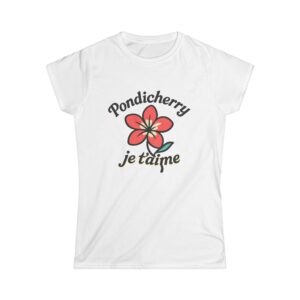
Pondicherry Je t’aime T-Shirt – A stylish way to showcase your love for Pondicherry wherever you go.
-
Pondicherry Je t’aime Tote Bag – Perfect for beach days or eco-friendly shopping, this bag carries more than just belongings; it carries memories.

-
Pondicherry Je t’aime Magnet – A simple but meaningful addition to your fridge that sparks travel nostalgia.
-
Pondicherry Je t’aime Puzzle – Recreate the charm of Pondicherry piece by piece with friends and family.
Each item is thoughtfully designed to celebrate Pondicherry’s unique identity and is available for worldwide shipping.
The Fascinating History of Pondicherry – From Ancient Settlements to Modern Coastal Charm
When travelers arrive in Pondicherry today, many are captivated by its serene blend of French elegance and Tamil vibrancy. But beneath the colorful streets and seafront cafés lies a rich and often turbulent history that shaped this unique coastal enclave into what it is today. Understanding Pondicherry’s past not only deepens appreciation of its charm but also explains why the city has become one of the most beloved travel destinations in India.
Ancient Roots – Before the Europeans
Long before the French set foot on its sandy shores, Pondicherry was part of the ancient Tamil kingdoms, including the Chola and Pallava dynasties. Archaeological findings from Arikamedu, a few kilometers south of the city, reveal that Pondicherry was already a bustling trading port as far back as the 2nd century BCE. Roman amphorae, beads, and pottery discovered here prove that merchants from the Roman Empire exchanged goods such as wine and olive oil for Indian spices, precious stones, and silk.
This early history places Pondicherry on the global map as a hub of international trade and cultural exchange, long before colonial powers arrived. Even today, visiting Arikamedu allows travelers to walk through the remnants of this forgotten chapter, a must for anyone passionate about history.
The Arrival of European Powers
From the 16th century onwards, India’s coastline attracted several European nations seeking dominance over trade routes. The Portuguese, Dutch, and Danish all established small outposts in South India, and Pondicherry was no exception.
However, it was the French who ultimately left the deepest imprint. In 1674, François Martin, the first Governor General of French India, officially established Pondicherry as a French trading settlement under the French East India Company. Over the following decades, the city grew from a small fishing village into a strategic colonial outpost.
French vs. British – The Battles for Pondicherry
The 18th century saw Pondicherry become a battleground between two European superpowers: the French and the British.
-
In 1748, during the War of Austrian Succession, British forces laid siege to Pondicherry but failed to capture it.
-
In 1761, however, the British succeeded in taking the city, reducing much of it to ruins.
-
By 1765, the French regained control under the Treaty of Paris and began rebuilding.
This back-and-forth struggle for dominance between France and Britain lasted decades, making Pondicherry a pawn in the larger geopolitical contest for India.
Interestingly, while other European colonies in India faded into history, Pondicherry remained a symbol of French persistence. Even after most of India came under British control, Pondicherry continued to fly the French tricolor until 1954, nearly seven years after India’s independence.
The French Legacy That Still Lives On
One reason Pondicherry is so enchanting today is that much of this French colonial heritage has been preserved. Visitors walking through White Town, also called the French Quarter, immediately feel transported to another era. Wide boulevards lined with bougainvillea-draped villas, mustard-yellow townhouses with carved wooden doors, and cafés serving croissants and café au lait all echo the city’s colonial past.
Landmarks such as Le Dupleix Hotel (named after Governor Joseph François Dupleix) and the French Consulate showcase neoclassical architecture that stands in contrast to the colorful chaos of Tamil quarters nearby. The legacy of French culture is not only seen in the architecture but also in education, cuisine, and language. French continues to be taught in schools, and many locals still converse fluently in it, making Pondicherry feel more cosmopolitan than many Indian towns of its size.
Independence and the Pondicherry Union with India
When India gained independence in 1947, Pondicherry remained under French control. But political movements, cultural shifts, and the growing desire for unification with India led to massive protests and negotiations.
Finally, on November 1, 1954, Pondicherry, along with other French territories (Karaikal, Mahe, and Yanam), was officially handed over to India in what is known as the de facto transfer of power. In 1962, the de jure (legal) transfer was completed, and Pondicherry became a Union Territory of India, maintaining a special administrative status.
This unique transition means that Pondicherry stands today as a rare blend of Indian vibrancy and French elegance. It is Indian at its heart, yet its European colonial past remains proudly visible, making it unlike any other city in the country.
The Influence of Sri Aurobindo and The Mother
Beyond colonial history, Pondicherry also became a spiritual center thanks to the arrival of Sri Aurobindo in 1910. A freedom fighter turned spiritual philosopher, Aurobindo made Pondicherry his home after leaving Bengal. Here, he developed his philosophy of Integral Yoga, which sought to combine material progress with spiritual growth.
In 1920, Mirra Alfassa, a French woman later revered as The Mother, joined him. Together, they founded the Sri Aurobindo Ashram, which continues to attract thousands of seekers from around the world. The Ashram emphasizes meditation, simple living, and inner transformation.
The legacy of The Mother also led to the creation of Auroville in 1968, an international township dedicated to human unity, located just outside Pondicherry. With residents from more than 50 countries, Auroville is home to the stunning golden sphere known as the Matrimandir, a spiritual center that draws global visitors.
This spiritual heritage has made Pondicherry not just a place of colonial nostalgia but also a destination for those seeking inner peace and personal growth.
The Modern Charm of Pondicherry
Today, Pondicherry has transformed into a vibrant tourist destination, beloved for its:
-
Beaches: Paradise Beach, Serenity Beach, and Promenade Beach.
-
Cuisine: A unique blend of Tamil flavors and French gastronomy.
-
Shopping: Boutique stores, local markets, and of course, the exclusive Pondicherry Je T’aime souvenir collection available on hotelpondicherry.com.
-
Festivals: Bastille Day (July 14) celebrated with parades and cultural events, Diwali, and Pongal.
It is this fascinating tapestry of war and peace, colonial rule and independence, spirituality and modern tourism that makes Pondicherry so compelling to travelers. And for those who wish to carry a piece of this story home, the Pondicherry Je T’aime souvenirs — from magnets to tote bags — capture the city’s essence in delightful ways.
The Spiritual Legacy of Pondicherry: Sri Aurobindo, The Mother, and Auroville
Pondicherry is not only famous for its beaches, colonial architecture, and charming streets—it is also a deeply spiritual destination that attracts seekers from around the world. At the heart of this spiritual aura are two towering figures: Sri Aurobindo and The Mother. Their teachings, as well as the experimental community of Auroville, have given Pondicherry a unique identity that blends philosophy, meditation, and universal human values with modern life.
Sri Aurobindo: Philosopher, Poet, and Revolutionary
Sri Aurobindo (1872–1950) began his journey as a political leader and revolutionary fighting for India’s independence. Educated in England, he returned to India with a sharp intellect and passion for freedom. His writings and speeches inspired thousands to resist colonial rule. However, his life took a dramatic turn when he settled in Pondicherry in 1910 after facing persecution by the British authorities.
In Pondicherry, he moved away from political activism to a life of intense spiritual practice, writing, and teaching. His philosophy, known as Integral Yoga, aimed not only at personal liberation but at a spiritual transformation of humanity as a whole. He believed that human beings could evolve beyond their current limitations and manifest a higher, divine consciousness on Earth.
Today, his works—such as The Life Divine, Savitri, and Essays on the Gita—remain widely read and studied. For visitors, the Sri Aurobindo Ashram in Pondicherry stands as a living testimony to his teachings. It is a peaceful retreat where meditation, silence, and inner growth are practiced daily.
The Mother: A Universal Visionary
Alongside Sri Aurobindo was Mirra Alfassa, a French spiritual collaborator known as The Mother (1878–1973). She was born in Paris, deeply interested in philosophy, spirituality, and mysticism from a young age. After meeting Sri Aurobindo in Pondicherry in 1914, she became his closest disciple and later carried forward his vision after his passing.
The Mother’s role was instrumental in shaping the practical aspects of Integral Yoga and making the ashram a flourishing spiritual community. She emphasized the importance of education, creativity, discipline, and service. Many of her teachings resonate with people seeking a path that combines spirituality with everyday life.
One of her most remarkable achievements was the founding of Auroville in 1968—a global township near Pondicherry that welcomes people from all countries, religions, and backgrounds.
Auroville: The City of Dawn
Auroville is one of the most fascinating experiments in human unity and sustainability in the world. Conceived by The Mother, it was inaugurated with soil from 124 countries poured into a lotus-shaped urn, symbolizing the unity of humanity.
The centerpiece of Auroville is the Matrimandir, a golden, dome-shaped meditation hall that looks like a futuristic temple. Visitors often describe entering the inner chamber as a profound experience of silence and stillness.
Beyond spirituality, Auroville is also known for:
-
Eco-friendly practices such as organic farming, permaculture, and renewable energy.
-
Arts and culture, with residents contributing to music, theatre, dance, and fine arts.
-
Handicrafts and local products, from handmade paper to incense, pottery, and textiles, which are popular souvenirs among travelers.
Pondicherry’s Spiritual Tourism
For many, visiting Pondicherry is not just about sightseeing but about inner exploration. The combination of Sri Aurobindo’s Ashram, The Mother’s legacy, and the international atmosphere of Auroville makes it a hub for yoga practitioners, meditators, and anyone curious about spirituality.
Travelers often combine their cultural exploration of the French Quarter and beaches with workshops, retreats, and community programs in Auroville. This makes Pondicherry a rare destination that balances leisure, learning, and inner transformation.
Souvenirs that Carry the Spirit of Pondicherry
When visitors want to take home more than just memories, the “Pondicherry, Je T’aime” souvenir collection becomes the perfect choice. These items are not only beautiful but also deeply symbolic of the city’s unique blend of French heritage and Indian spirituality.
For example:
-
A Pondicherry Je T’aime tote bag makes a great eco-friendly accessory, echoing the sustainable lifestyle encouraged in Auroville.
-
A souvenir magnet can brighten your refrigerator, reminding you daily of Pondicherry’s charm and spiritual energy.
-
A Pondicherry Je T’aime notebook is perfect for journaling, meditation notes, or travel memories—something that resonates with seekers who visit the Ashram or Auroville.
Each of these products carries not just a design but a story—capturing Pondicherry’s soul, culture, and identity in a way that resonates with travelers who want to stay connected to this magical city.
How to Reach Pondicherry and Plan Your Trip
Pondicherry, often called Puducherry, is one of the most accessible destinations in South India, drawing both domestic and international travelers. Whether you’re coming from nearby cities like Chennai and Bangalore, or flying in from abroad, there are several convenient ways to reach this charming coastal town.
By Air: The Nearest Airports to Pondicherry
Although Pondicherry has its own small airport, flight connectivity is limited to a few regional routes. For most travelers, the best option is to land at:
-
Chennai International Airport (MAA): Located about 150 km from Pondicherry, it is the nearest major airport with domestic and international flights. From Chennai, you can reach Pondicherry in 3–4 hours by road.
-
Bengaluru International Airport (BLR): About 320 km away, this airport is another option, especially for travelers coming from Europe or the US. Overnight buses and taxis are available from Bangalore.
-
Tiruchirappalli (Trichy) Airport (TRZ): Around 200 km from Pondicherry, it is a smaller but convenient option with good connections to Southeast Asia.
Many travelers choose to land in Chennai and then take the scenic East Coast Road (ECR) to Pondicherry. This drive along the Bay of Bengal is one of the most beautiful coastal highways in India.
By Train: Connecting to Southern India
Pondicherry is well connected by train to Chennai, Villupuram, Bangalore, and other cities in South India. The Puducherry Railway Station is centrally located, making it easy for travelers to arrive directly in town.
Popular train routes include:
-
Chennai to Pondicherry Express (6 hrs)
-
Bangalore to Pondicherry (overnight)
-
Villupuram to Pondicherry (local connections)
Trains are a budget-friendly and comfortable way to travel, especially if you want to experience the Indian countryside along the way.
By Road: The Scenic East Coast Road (ECR)
Road trips to Pondicherry are extremely popular, particularly from Chennai and Bangalore.
-
Chennai to Pondicherry (150 km / 3.5 hrs): The East Coast Road offers breathtaking views of the sea, small fishing villages, salt pans, and backwaters. It is one of the most scenic drives in India.
-
Bangalore to Pondicherry (320 km / 6 hrs): A longer but enjoyable road trip through Tamil Nadu’s lush countryside.
-
Private taxis, buses, and self-drive rentals are widely available. For budget travelers, government buses (TNSTC, SETC) connect Pondicherry to major Tamil Nadu cities.
Best Time to Visit Pondicherry
Pondicherry has a tropical climate, so it’s important to plan your trip at the right time of year.
-
October to March (Peak Season): Pleasant weather with cool breezes, perfect for exploring beaches, French Quarter, and Auroville. This is the most popular time to visit.
-
April to June (Summer): Hot and humid, but good for budget travelers as hotel rates are lower. Beach lovers can still enjoy early mornings and evenings.
-
July to September (Monsoon): Heavy rains but lush green surroundings. A good time for spiritual retreats or quiet holidays.
? Pro tip: If you’re visiting in July, don’t miss the Bastille Day celebrations (14 July), when Pondicherry comes alive with parades, cultural events, and French-Indian festivities.
Travel Tips for First-Time Visitors
-
Book accommodations early during weekends and festive seasons—Pondicherry is a favorite getaway from Chennai.
-
Rent a scooter or bicycle to explore the city like a local. Many guesthouses and hotels offer rentals.
-
Respect the Ashram and Auroville rules—silence, dress modestly, and avoid photography in meditation areas.
-
Try local cuisine—French pastries, Creole dishes, fresh seafood, and South Indian specialties like dosas.
-
Take back a memory with a Pondicherry souvenir from the Pondicherry Je T’aime collection, available online at HotelPondicherry.com.
For example:
-
A canvas tote bag view product is perfect for carrying beach essentials.
-
A souvenir notebook view product can be used as your travel diary.
-
A magnet view product makes a thoughtful little gift for friends and family.
These souvenirs are not only stylish but also sustainable, reflecting Pondicherry’s eco-conscious vibe—especially relevant after a trip through Auroville’s green practices.