Introduction: A Digital Era You Cannot Ignore
In the past, having a digital presence was considered optional. If you are wondering why your business needs a website in 2026, the answer is simple: it is no longer a luxury, but the absolute foundation of your business identity, credibility, and growth engine.
The way people discover, evaluate, and trust businesses has fundamentally transformed. Customers no longer rely on word-of-mouth alone or physical storefront visibility. Instead, their purchasing journey begins online—through search engines, localized map directories, social media platforms, and increasingly, AI-powered tools that curate and recommend services instantly.
If your business does not have a website, or if your website is outdated, slow, or poorly designed, you are not just missing out on abstract opportunities—you are actively losing market share to competitors who are digitally prepared.
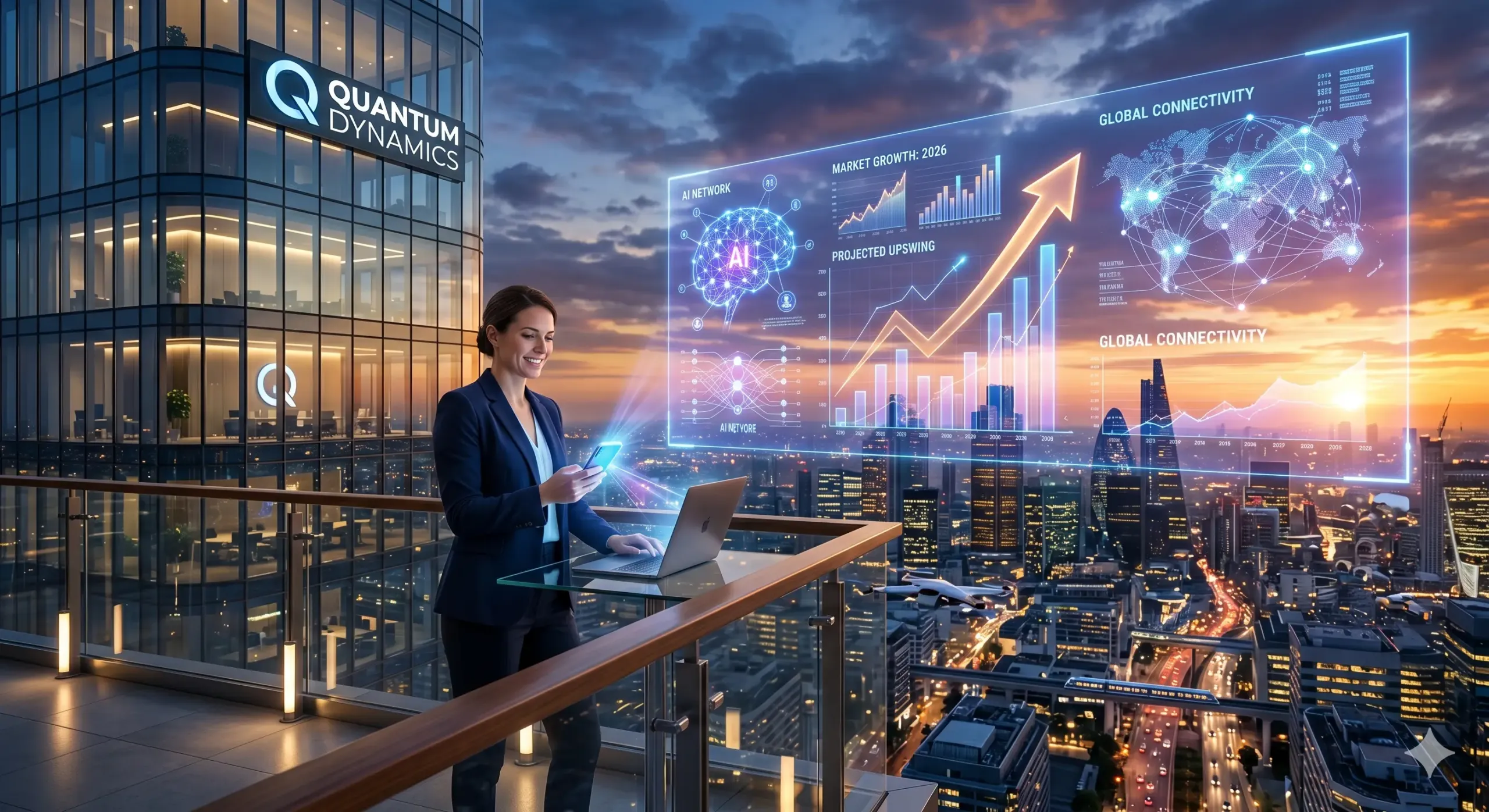
This comprehensive guide explores why a digital storefront is essential, how artificial intelligence (AI) is reshaping consumer interactions, and how your business can leverage a modern website as a powerful tool for scaling, visibility, and long-term sustainability.
1. The Digital Shift: Why Online Presence Is No Longer Optional
We are operating in an economy where the internet is the primary interface for everyday life. From researching local contractors and booking travel to purchasing enterprise software, consumers default to digital platforms.
Data clearly illustrates this shift: 97% of consumers use the internet to find and research local businesses. Furthermore, roughly 76% of consumers look up a business online before visiting its physical location. If you are not in those search results, you effectively do not exist to a massive segment of your target market.
Your website acts as your ultimate digital storefront, open 24 hours a day, 365 days a year.
- Operating Without a Website: Invisible to search engine traffic and local “near me” queries. Questionable credibility, relying solely on third-party platforms. Lost leads outside of standard operating hours.
- Operating With a Modern Website: Highly visible on Google, capturing active buyer intent. Complete narrative control over your brand and reputation. Continuous lead generation functioning 24/7.
2. First Impressions Now Happen Online
Before a prospect ever picks up the phone or walks through your door, they have already formed an opinion about your business based on your digital footprint.
Your website represents the critical deciding factor between you and your competitors. According to recent industry benchmarks, 75% of consumers admit to judging a company’s overall credibility based entirely on their website’s design. A meticulously designed, fast-loading website communicates:
- Professionalism: You invest in your business and, by extension, your clients.
- Reliability: You are established and technologically competent.
- Transparency: Your services, pricing models, and contact methods are clear.
Conversely, a broken Facebook page with posts from 2023, or a slow, non-mobile-responsive website, instantly erodes trust. In the digital space, confusion equals abandonment; users will navigate away to a competitor within seconds if your site is difficult to use.
3. The Role of AI in Modern Websites
Artificial Intelligence is the defining technological shift of the 2020s, transforming websites from static digital brochures into dynamic, interactive business assistants.
AI-Powered Customer Experience
Modern websites leverage AI to provide white-glove service at scale.
- Conversational AI: Traditional contact forms convert at an average of 2–3%. However, websites equipped with conversational AI chatbots often see conversion rates jump to 10–15%. These bots answer FAQs, qualify leads, and schedule appointments instantly.
- Personalization: AI algorithms analyze a visitor’s browsing behavior in real-time, dynamically adjusting the content, product recommendations, or calls-to-action to match their specific intent.
- Smart Search: AI-driven search bars understand natural language and typos, ensuring users find exactly what they are looking for without frustration.
AI in Marketing and SEO
Search Engine Optimization (SEO) is no longer a manual guessing game.
- AI tools seamlessly analyze competitor content and suggest high-ranking keywords.
- Predictive analytics forecast consumer search trends, allowing you to publish relevant content before your competitors do.
- Automated A/B testing continually adjusts headlines and layouts to maximize user engagement.
4. 24/7 Availability and Customer Convenience
Unlike a physical brick-and-mortar location with strict operating hours, your website never sleeps. This uninterrupted availability caters to the modern consumer’s demand for instant gratification and asynchronous communication.
With a properly structured website, customers can:
- Educate themselves on your methodologies and service tiers at 2:00 AM.
- Download whitepapers, case studies, or product specifications.
- Submit detailed inquiries or book services seamlessly across different time zones.
A website ensures your business is constantly generating momentum, turning idle off-hours into productive lead-generation windows.
5. Cost-Effective Marketing Compared to Traditional Methods
Traditional advertising—such as billboards, direct mail flyers, and print media—requires massive upfront capital, offers limited targeting, and is notoriously difficult to track for Return on Investment (ROI).
A website flips this dynamic entirely. Combined with digital marketing strategies, it offers:
- Surgical Targeting: You can attract demographics actively searching for your exact solutions.
- Quantifiable ROI: Every click, form submission, and phone call can be tracked.
- Compounding Value: Unlike a billboard that disappears when you stop paying rent, a well-optimized SEO blog post can generate free, organic traffic for years.
When evaluating customer acquisition costs (CAC), inbound leads generated through a website are consistently more cost-effective than outbound traditional marketing.
6. Expanding Your Reach Beyond Local Boundaries
Physical businesses are inherently bottlenecked by geography. A website permanently removes that limitation, democratizing the competitive landscape.
Whether you want to expand to a neighboring city, ship products nationwide, or offer digital consulting globally, your website is the vehicle for that expansion. Interestingly, localized reach is also amplified by the web; queries containing “near me” have grown by over 500% in recent years. Even if you only serve a 10-mile radius, dominating that digital radius requires a website.
7. Building Trust and Credibility (Why Social Media Isn’t Enough)
Many small business owners mistakenly believe a Facebook or Instagram page is a sufficient substitute for a website. In 2026, this is a dangerous misconception.
You do not own your social media profiles. Algorithm changes, account suspensions, or platform policy shifts can destroy your visibility overnight. For context, the organic reach for Meta (Facebook/Instagram) business pages has plummeted to under 5%. This means without paid promotion, only 5 out of 100 followers even see your posts.
Furthermore, statistics show that only 30% of consumers fully trust a business that relies solely on social media without a dedicated website. A professional website builds unshakeable trust by:
- Providing a permanent home for verified customer reviews and testimonials.
- Displaying transparent, comprehensive service catalogs.
- Serving as the authoritative link for your Google Business Profile (which actively penalizes businesses without websites in map rankings).
8. Showcasing Your Products and Services Effectively
Your website serves as your ultimate digital showroom, free from the physical constraints of floor space.
You can leverage rich media to drive conversions:
- High-Fidelity Visuals: Interactive galleries and 3D product spins.
- Deep-Dive Explanations: Comprehensive service pages that answer every potential customer objection before it is even asked.
- Social Proof: Highlighting before-and-after portfolios and robust, data-backed case studies that prove your competence.
9. Data and Analytics: Understanding Your Customers
In a business environment transitioning away from third-party cookies, “first-party data” (data you collect directly from your audience) is incredibly valuable. Your website is the ultimate data collection engine.
Through integrated analytics, you can monitor:
- Exactly how visitors find your site (Search, Social, Direct).
- Which specific pages hold their attention the longest.
- Where the friction points are that cause them to leave.
This data allows you to pivot from guessing what your customers want to knowing exactly what they are doing, enabling you to optimize your offerings and marketing spend with surgical precision.
10. Improving Customer Support and Communication
Customer support is traditionally a high-friction, resource-heavy department. Websites streamline this through intelligent self-service.
By implementing comprehensive FAQ databases, automated ticketing systems, and client portals, you drastically reduce the operational burden on your staff. Customers actually prefer this; modern buyers heavily favor self-service options where they can find immediate answers rather than waiting on hold for a representative.
11. Increasing Sales and Revenue
Ultimately, your website’s primary function is to serve as a revenue-generating asset.
For service-based businesses, integrating online booking systems directly into a website is a game-changer. Recent industry studies indicate that local businesses integrating direct online booking see revenue increases of up to 120%, while automated reminders drop appointment no-show rates by 90%.
By ruthlessly optimizing your website’s User Experience (UX) and User Interface (UI), you remove the friction between a customer’s desire and their purchase, directly boosting your bottom line.
12. Competing in a Digital-First World
Consider this stark reality: Your competitors already have websites. This is exactly why your business needs a website; when a prospective client searches for your industry’s services, the competitor with the clearest, fastest, and most authoritative website wins the contract.
If you lack a digital presence, you are effectively forfeiting your market share to competitors by default. A strong website levels the playing field, allowing agile small and medium-sized enterprises (SMEs) to outmaneuver larger, slower corporations through superior digital execution.
13. Integration with Social Media and Digital Platforms
Successful marketing is omnichannel, but it requires a central hub. Your website is the sun in your digital solar system; everything else orbits around it.
- Social Media: Drives top-of-funnel awareness and funnels traffic to your website.
- Email Marketing: Captures leads on your website to nurture them over time.
- Paid Advertising (PPC): Directs high-intent searchers to highly optimized landing pages on your website.
Without the website at the center, your marketing efforts are fragmented and significantly less effective.
14. Future-Proofing Your Business
The technological landscape is accelerating. Innovations like Voice Search optimization (smart speakers), augmented reality (AR) shopping, and deeper AI integrations are becoming consumer standards.
Having a modern, scalable website infrastructure ensures you are not left behind when consumer behaviors shift. You cannot build advanced digital integrations on a platform you do not own. A website ensures you control the architecture of your business’s future.
15. Your Website as a Growth Engine
When viewed correctly, a website is never “finished.” It is a living, breathing asset that appreciates in value over time.
As you add more content, acquire more backlinks, and refine your conversion funnels, your website’s domain authority grows. This creates a compounding flywheel effect: more visibility leads to more traffic, which leads to more data, which allows for better optimization, which leads to more revenue. It ceases to be an IT expense and becomes your most reliable salesperson.
Conclusion
In 2026, debating whether your business needs a website is akin to debating whether your business needs a bank account. It is no longer optional—it is the baseline requirement for commercial existence.
Your website represents your digital identity, your primary marketing platform, your most efficient sales tool, and your front-line customer service system. With the integration of AI and advanced automation, these platforms have evolved from static pages into highly intelligent business partners.
Businesses that invest aggressively in their digital presence are actively positioning themselves to capture market share, build unshakeable credibility, and secure long-term success. Those that rely on outdated methods or borrowed social media platforms risk fading into obscurity. To scale, compete, and thrive in the modern economy, building and maintaining a high-performance website is the single highest-leverage investment you can make.
Check all our Low Cost Web Site Design offers !!!





















Ready to Future-Proof Your Business?
Don’t let your competitors win the digital race. Let’s build a high-performing website tailored to your exact goals.