Web Agency Trends 2026: How AI and Full-Service Models are Redefining ROI for SMBs
Introduction: The Great Maturity of the Web Industry
As we navigate through the second quarter of 2026, the digital landscape has shifted from the fragmented “gold rush” of the early 2020s into a period of profound strategic maturity. This is not just another yearly report; it is a transformation roadmap based on the most extensive survey in the industry. Elementor’s latest study, capturing insights from 1,280 agencies across 79 countries, provides a definitive roadmap for where the industry stands today.
At Low Cost Web Agency, we have spent decades anticipating these shifts. We believe that understanding these global patterns is vital for our clients—from small local businesses to international corporations. This guide is designed to deconstruct how web agencies build, earn, grow, and integrate AI in 2026. It explores the move from transactional “website making” to long-term digital partnership.
Chapter 1: The Anatomy of the 2026 Agency – Structure, Reach, and Specialized Segments
The study reveals a significant consolidation of services. The traditional siloed approach—where design, development, and marketing were separate entities—is dead.
1.1 The Rise of the “Full-Service” Hybrid
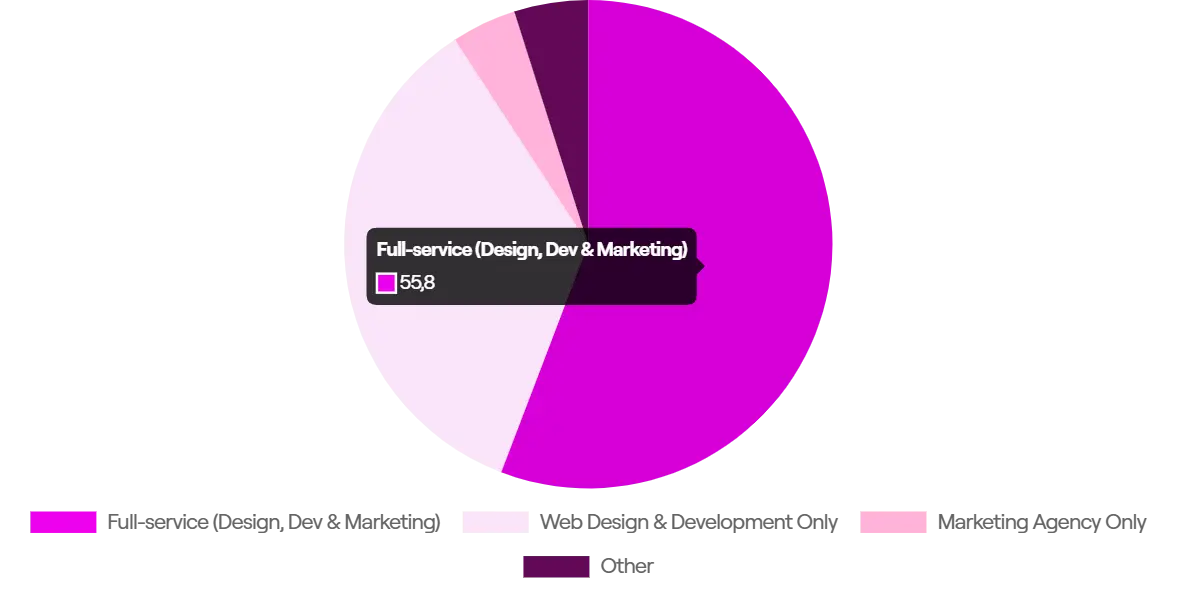
56% of agencies now identify as “Full-Service.” This shift is driven by the client’s need for a “Single Source of Truth.” When an agency handles design, development, and marketing simultaneously, the synergy between the site’s architecture and its conversion goals becomes seamless. Marketing-only agencies remain rare (under 5%), proving that clients in 2026 want integrated solutions, not fragmented services.
1.2 The Financial Impact of Integrated Marketing
One of the most striking findings is the financial impact of marketing services. Agencies that integrate marketing are nearly twice as likely to land projects exceeding $5,000 (30.8% vs. 17.7%). At Low Cost Web Agency, we have integrated SEO and web marketing into our core builds for years, knowing that a website without a strategy is an invisible asset.
1.3 Lean, Agile, and Expert: The Small Team Dominance
Despite the “Global Agency” branding many companies project, the reality of 2026 is lean.
– 29% are Solo Operators (The AI-powered “Super-Freelancer”).
– 27% rely on Freelancer Networks.
– 27% have small teams of 2–5 people.
Only 18% have grown beyond that. This agility allows for faster decision-making and closer client relationships—a hallmark of the Low Cost Web Agency approach.
1.4 The Myth of the “Global-Only” Agency
The web is borderless, but reputation remains local. 45% of agencies acquire 80% or more of their clients from their local area. Proximity breeds trust. Even as a global player, we emphasize local SEO and regional cultural nuances, ensuring that our “Low Cost” model doesn’t sacrifice the “High Touch” personal connection.
Web Agency Annual Revenue Distribution 2026
A look at the global financial landscape of web agencies in 2026, where 60.5% of the market operates under the $100k threshold.
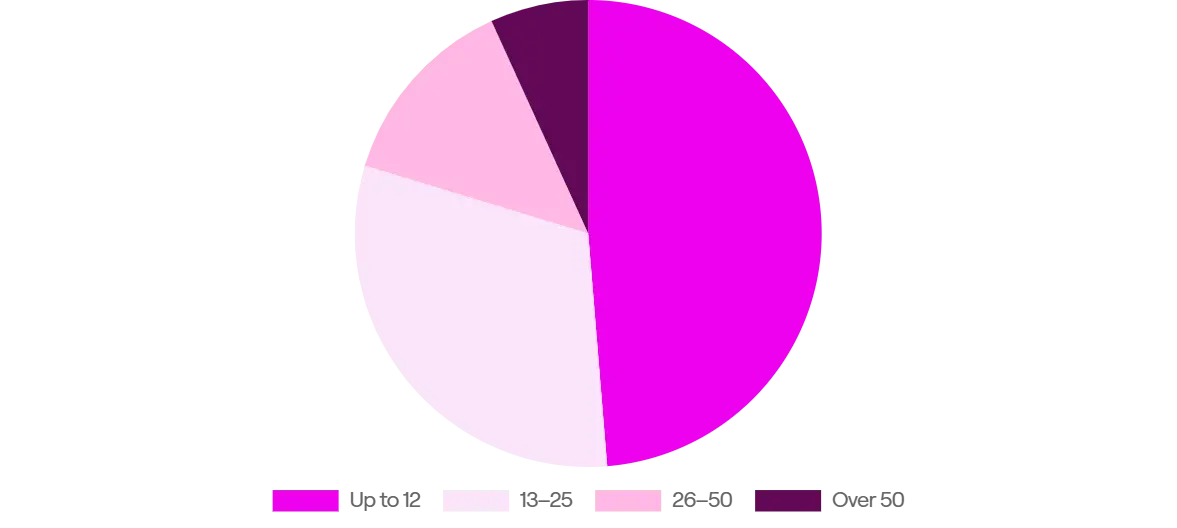
Annual New Project Volume per Agency
Most agencies focus on a boutique model, with nearly 50% handling 12 or fewer new projects per year to maintain quality.
Chapter 2: Revenue, Profitability, and the Pricing Paradox in the Modern Era
Revenue often acts as a vanity metric, but in 2026, how an agency earns its capital is the only true indicator of its longevity. The financial divide between agencies that are merely surviving and those building a scalable, high-value asset has reached a critical tipping point. The 2026 Elementor study highlights that the synergy between pricing power and revenue mix is what separates market leaders from those stuck in a cycle of “feast or famine.”
2.1 The Global Revenue Landscape: Analyzing the $100k Glass Ceiling
The statistical reality of the web industry remains surprisingly grounded: 61% of web agencies worldwide operate within a revenue bracket of under $100,000 annually. As we move up the financial ladder, the barrier to entry for the “half-million club” remains high. Only 9% of respondents report revenues exceeding $500,000, and a mere 4% have successfully crossed the $1 million mark.
For you, the client, this data is a double-edged sword. It means the market is saturated with hungry, affordable talent, but many of these operators are working within perilously tight margins where every hour of delay can compromise the project’s quality. At Low Cost Web Agency, we have spent years perfecting an internal cost structure that defies these statistics. By leveraging international purchasing efficiencies and a lean, AI-optimized operational model, we deliver the quality typically found in that “top 9%” at a price point that remains accessible to the 61%.
2.2 The “Emerging Agency” Trap: Why Headcount Can Kill Profit
One of the most profound and cautionary insights of the 2026 report is the struggle of the “Emerging Agency.” These are small teams (often 3-8 employees) that generate under $100k in revenue. The data reveals a dangerous trend: these firms take on the massive complexity and fixed costs of payroll without having the brand authority to increase their pricing. In short, they price like solo freelancers but have the overhead of a corporate firm.
This is a recipe for high staff turnover and project burnout. When choosing a partner, it is vital to ask: “Is your team built for my success, or am I just paying for your office rent?” We avoid this trap by maintaining a hyper-efficient core team and utilizing a trusted network of specialists, ensuring your budget goes into the pixels and the code, not into administrative bloat.
2.3 Pricing Power by Segment: Specialization as a Multiplier
Average project sizes in 2026 follow a predictable but revealing pattern that underscores the value of expertise over manpower:
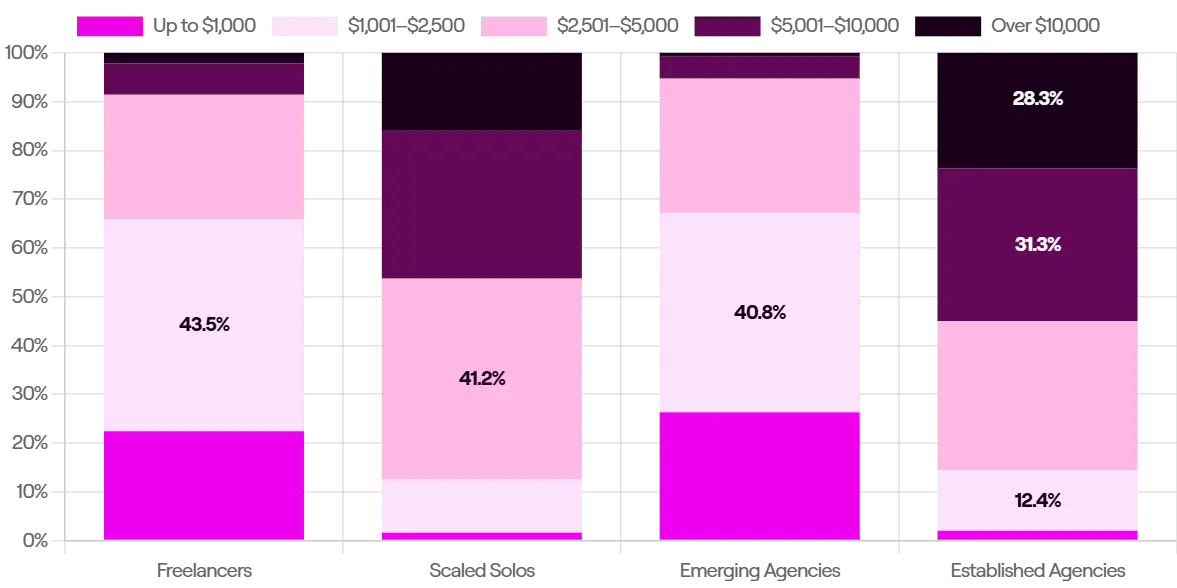
- Freelancers & Emerging Agencies: Typically cluster in the $1,000–$2,500 range for standard builds.
- Scaled Solos: These “super-experts” jump to the $2,500–$5,000 tier by offering deep specialization in niches like high-converting eCommerce or complex technical SEO.
- Established Agencies: Consistently dominate the $5,000–$10,000+ bracket.
The most fascinating takeaway? Scaled Solos achieve significantly higher project values than Emerging Agencies despite having no permanent employees. This proves that in 2026, positioning and strategic value are infinitely more profitable than simply “having more hands on deck.” Quality over quantity is no longer a cliché; it is a documented financial reality.
2.4 The Revenue Diversification Gradient: Moving Beyond the “Build”
How agencies earn their money determines their stability. We analyze four core streams: Website Builds, Maintenance, Hosting, and Marketing.
Freelancers remain dangerously dependent on one-off builds, which account for nearly 60% of their annual income. Conversely, Established Agencies have successfully shifted toward Marketing Services, which now generates over 50% of revenue for 40% of them. The “Holy Grail” of 2026 is Recurring Revenue.
Currently, only 26% of agencies rely mostly on retainers, leaving 43% stuck in the exhausting project-by-project loop. At Low Cost Web Agency, we advocate for a hybrid model. We provide the initial build at an aggressive price point but encourage long-term maintenance and SEO retainers. This isn’t just good for our stability; it’s essential for your site’s health. A website is a living asset that requires constant optimization to stay ahead of the competition and shifting search algorithms.
Chapter 3: Growth and Momentum – Navigating the 2026 Digital Surge
Optimism in the web sector has reached a five-year high. While the broader economy faces challenges, the demand for high-performance digital infrastructure is accelerating. However, growth in 2026 requires a different playbook than the one used in 2020.
3.1 Past Performance vs. Future Outlook: The Acceleration Factor
In 2025, 64% of agencies saw their revenue increase, a solid recovery from the post-pandemic correction. However, for 2026, that confidence has surged: 73% of agencies anticipate a significant jump in revenue. This indicates a market that is not just recovering, but fundamentally retooling for a new era of digital commerce.
But here is the warning: Revenue growth does not always mean profit growth. 16% of agencies that grew their top-line revenue in the past year reported no improvement in their bottom line. The culprit? Rising costs of specialized AI talent, “SaaS fatigue” from ballooning software subscriptions, and the hidden cost of managing increasingly complex client expectations. Growth without efficiency is a slow death; at Low Cost Web Agency, our focus is on profitable efficiency.
3.2 The Profitability Gap: Why “Lean” Wins
Profitability generally follows revenue, but the “leaks” in the boat are often found in the middle segments. Factors like pricing pressure from global competitors and the necessity to invest in R&D for AI can eat away at margins. Interestingly, Emerging Agencies show the strongest confidence in future growth (80%), likely because they are the most desperate to automate and find a scalable path. Established Agencies follow closely at 76%, relying on their reputation and recurring client base.
3.3 Why 2026 is “The Year of the Client”
With 73% of agencies aggressively pursuing growth, the competition for high-quality, long-term clients has reached a fever pitch. This “buyer’s market” presents a massive opportunity for business owners. There has never been a better time to negotiate a comprehensive digital partnership rather than a one-off transaction.
By bundling build work with hosting, security, and marketing, you lock in a partner who is financially incentivized to see your business grow. In 2026, your agency shouldn’t just be a vendor; they should be a stakeholder in your digital ROI. As we move forward, the agencies that thrive will be those that provide radical transparency in how they use AI to lower costs while increasing the quality of the final output.
Dominance of the Full-Service Agency Model
The majority of agencies (55.8%) have pivoted to a full-service model, combining design, development, and marketing.
Average Project Size Comparison by Agency Segment
Established agencies dominate high-value brackets ($5k+), while Scaled Solos outperform Emerging Agencies in mid-tier pricing.
Chapter 4: How Agencies Operate – Decoding the Mechanics of Production in 2026
In the digital landscape of 2026, operational excellence is no longer just a “nice-to-have”—it is the fundamental barrier between agency survival and obsolescence. The latest data suggests a shift toward short, intense production cycles and a high degree of budget discipline. However, underneath these positive metrics lies a complex story of internal efficiency versus external friction. Understanding what happens behind the scenes is crucial for any business owner looking to maximize their digital investment.
4.1 Project Volume and Output: The Rise of the “Boutique” Efficiency
How much work does a high-performing modern agency actually handle? The 2026 benchmarks reveal a market increasingly focused on quality over sheer quantity:
- 49% of agencies take on 12 or fewer new projects per year. This confirms that nearly half of the market operates on a “one major project per month” cadence, favoring deep focus and personalized service.
- 31% of agencies handle between 13 and 25 projects, representing the agile, medium-capacity firms.
- Only 20% of agencies manage a high volume of more than 25 new builds annually.
This distribution proves that the majority of the market has abandoned the “website factory” model in favor of a boutique approach. When it comes to long-term management, the numbers shift: 38% manage up to 20 websites on a maintenance plan, while established market leaders often handle portfolios of 100 to 200+ active sites. At Low Cost Web Agency, we strike a strategic balance—using AI to manage a high volume of maintenance tasks while keeping our new build capacity limited to ensure bespoke quality for every client.
4.2 The Speed of Delivery: Why “Fast” is the New “Normal”
In 2026, speed has become a primary competitive differentiator. The expectations for delivery have never been tighter:
- 24% of projects are completed in under 30 days. These are typically high-efficiency builds or specialized landing page funnels.
- 64% of projects wrap up within the 1 to 3-month window, which has become the industry gold standard for a full website launch.
- Only 12% of projects extend beyond three months, often due to extreme technical complexity or enterprise-level stakeholder requirements.
It is important to note the “Segment Divide.” Freelancers move the fastest because they have zero internal overhead, often finishing sites in mere weeks. Conversely, Established Agencies often take 4 months or more. This isn’t necessarily due to slowness, but because their projects involve deeper integrations—CRM syncing, advanced SEO silos, and multi-layered stakeholder approvals. The lesson? Speed must never come at the expense of strategic depth.
4.3 The “Productivity Blockers”: Identifying the Silent Killers of ROI
If you have ever felt that a digital project was dragging, the 2026 data identifies the exact culprits. Interestingly, the primary bottlenecks are external, not internal. Client-side factors dominate the list of productivity blockers across every segment of the industry:
- Missing or Delayed Materials (64%): This remains the #1 reason projects stall globally. When copy, brand assets, and high-resolution images aren’t ready at the start, the agency’s momentum is paralyzed.
- Slow Feedback Loops (57%): Layered approval processes and “decision by committee” within client organizations can turn a 2-week task into a 2-month ordeal.
- Unclear Briefs and Scope Creep (43%): Changing the goalposts mid-stream is a guaranteed way to inflate budgets and extend timelines.
At Low Cost Web Agency, we have solved this through a “Strategic Onboarding” protocol. We provide our clients with clear templates and AI-assisted content frameworks before we begin coding. This proactive approach ensures we stay within that optimal 1–3 month delivery window, protecting your timeline and your budget.
4.4 Billable Time, Efficiency, and Budget Discipline
How much “real work” is actually happening? 67% of agencies report that over 60% of their total time is spent on billable production. Efficiency peaks with Scaled Solos and Established Agencies, who have the systems in place to minimize administrative “leakage.”
Perhaps the most impressive metric of 2026 is budget discipline. 79% of agencies report that their projects stay on budget. Only a tiny 3% report that more than half of their projects exceed the original estimate. This high level of professionalism shows a mature market that has mastered the art of scoping. However, it also means that in 2026, an agency’s quote is usually firm—emphasizing the need for a partner who gets the scope right the first time. Our 32 years of experience in international purchasing and project management gives us the “expert eye” needed to provide quotes that are both competitive and accurate, with no hidden surprises.
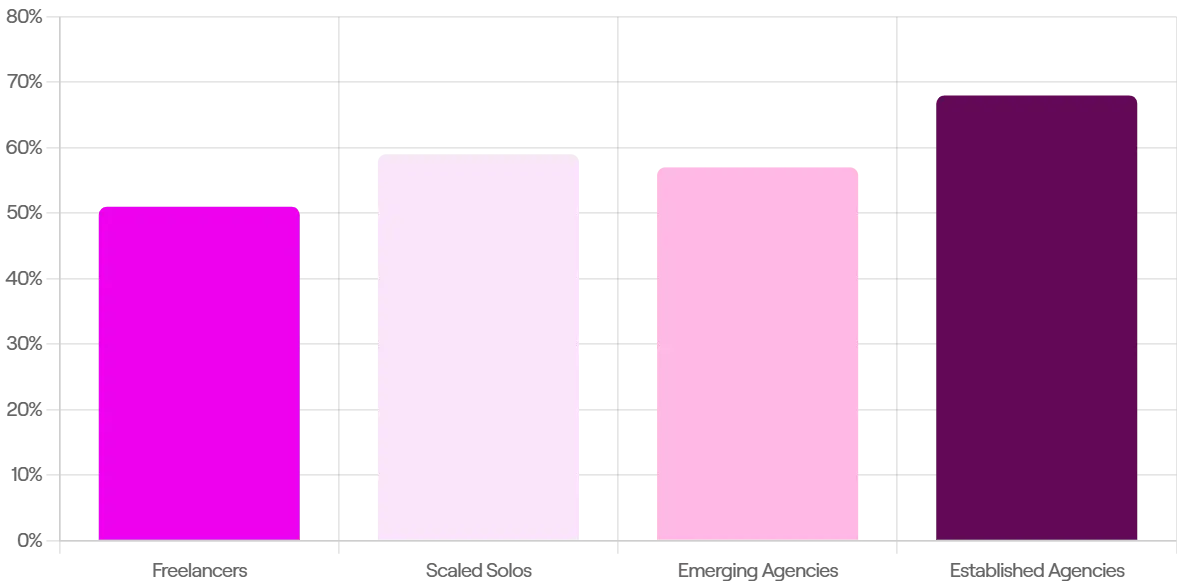
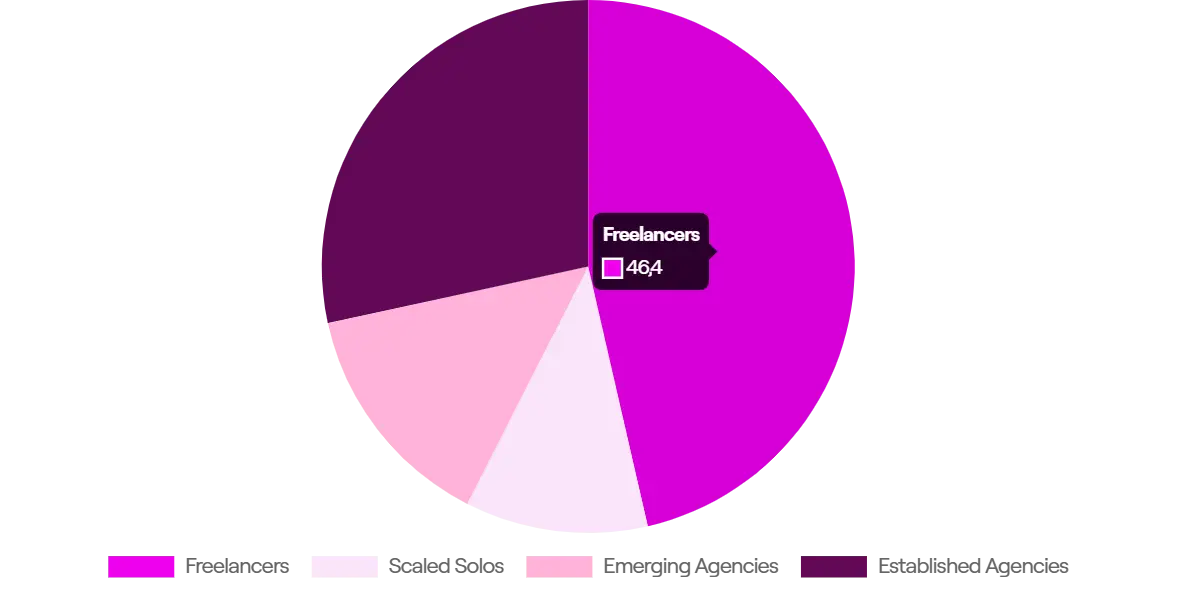
2026 Web Industry Segmentation
Freelancers still comprise the largest segment of the market at 46.4%, followed by Established Agencies at 28%.
Chapter 5: AI and the Agency of Tomorrow – Transitioning to the Infrastructure Era
If the early 2020s were characterized by the “AI Gold Rush,” 2026 represents the era of the AI Utility. We have collectively moved past the novelty phase. AI is no longer a separate tab open in a browser; it is the silent engine integrated into the very IDEs (Integrated Development Environments), CRMs, and project management tools that define a modern web agency. According to the exhaustive Elementor survey, AI adoption hasn’t just increased—it has fundamentally rewired how digital value is created and delivered.
5.1 Sentiment and Value Derivation: The Death of the AI Skeptic
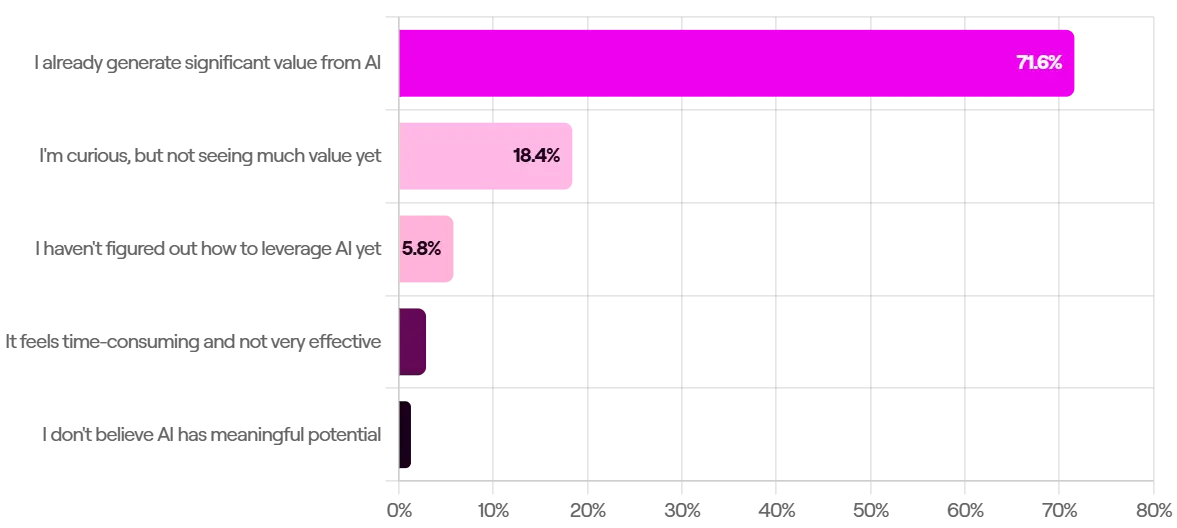
The philosophical debate regarding AI’s place in the creative industry is effectively over. The data speaks for itself: 72% of agencies globally report deriving significant, measurable value from AI in their daily operations. We are seeing a market where the competitive advantage is no longer just “having” AI, but how deeply it is integrated into the agency’s infrastructure.
Furthermore, 18% of agencies identify as “AI-curious,” indicating they are in the final stages of full-scale integration. Perhaps most tellingly, only a statistically negligible 1% of the global agency community holds a negative view toward the technology. At Low Cost Web Agency, we identified this shift years ago. We recognized AI as the “Great Equalizer”—a technology that allows a lean, agile team to match the production volume of a 50-person corporate firm without the associated overhead, a core pillar of our ability to offer high-end results at “Low Cost” pricing.
5.2 The Hierarchy of AI Use Cases: Specialization at Scale
AI is being deployed across the entire lifecycle of a web project, but three dominant use cases have emerged as the foundation of the 2026 workflow:
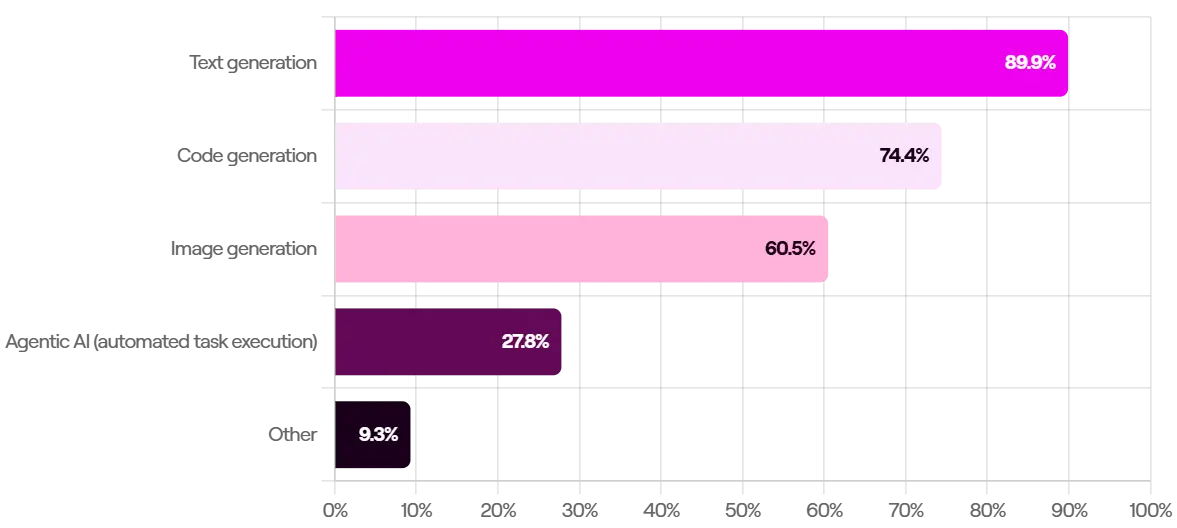
- Text Generation (90% Adoption): This has evolved far beyond simple blog writing. AI is now used for complex SEO intent mapping, multi-language translation, and generating high-converting micro-copy for UI/UX. It has effectively cured the “content bottleneck” that historically delayed website launches for months.
- Code Generation (74% Adoption): Modern developers are transitioning into “Code Architects.” Instead of writing boilerplate CSS or PHP, they utilize AI to generate syntax, allowing the human expert to focus on security audits, logical flow, and complex integrations. This has led to a 40% reduction in technical debt for sites built in 2026.
- Image and Asset Generation (61% Adoption): Tools like Midjourney, Adobe Firefly, and specialized generative models have democratized high-end visual branding. Agencies can now produce custom, brand-specific photography and icons at a fraction of the cost of traditional photoshoots.
5.3 The Emergence of Agentic AI: The Rise of Autonomous Systems
While generative AI creates, Agentic AI acts. This is the true frontier of 2026. Currently, 28% of agencies have already integrated “Agents”—AI systems capable of multi-step, goal-oriented tasks without constant human prompting. These agents monitor server health, perform automated regression testing, and can even optimize a client’s Google Ads bidding strategy in real-time based on site traffic changes.
Interestingly, team-based agencies are the most rapid adopters of Agentic AI (35%), as they seek to scale operations without increasing payroll. At Low Cost Web Agency, we leverage these autonomous agents to handle the “boring but critical” aspects of web management, ensuring your site remains fast, secure, and optimized 24/7 while we focus on your broader business strategy.
5.4 Workflow Replacement and the Efficiency Frontier
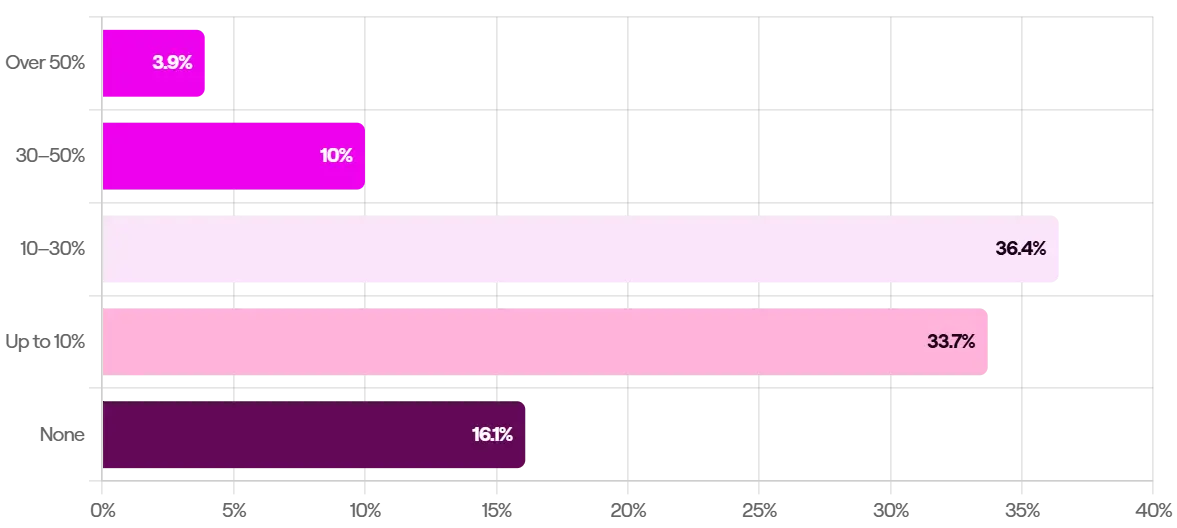
The impact of AI on agency efficiency is no longer speculative. 36% of agencies report that AI has replaced between 10% and 30% of their manual workflow. However, we are seeing the rise of “AI-First” Agencies (14% of the market), where over 30% of all tasks are fully automated.
The most aggressive adopters are Emerging Agencies. A staggering 27% of them report that AI replaces more than 30% of their workflow—nearly double the industry average. This is a survival mechanism: to compete with established giants, these smaller firms must automate to achieve a competitive “Cost-Per-Project.” By being part of this high-efficiency bracket, we can redirect our human energy toward high-value consulting, branding, and conversion strategy—the creative nuances that AI still cannot replicate.
5.5 The Tools of the Trade: A Fragmented but Dominant Landscape
While thousands of niche tools exist, the 2026 landscape is governed by a few “Digital Monoliths”:
- ChatGPT (OpenAI): Remains the primary horizontal tool for general text and high-level brainstorming.
- Claude (Anthropic): Has emerged as the “Developer’s Choice,” preferred for its superior ability to handle complex coding logic and its more “human” and nuanced writing style.
- Google Gemini: Dominates for agencies focused on deep SEO and data analysis, thanks to its native integration with the Google Search Console and Marketing Platform ecosystem.
In conclusion, the Elementor report confirms that AI is not replacing the web agency; it is redefining the value proposition of the agency. The firms that will dominate 2026 and beyond are those that view AI not merely as a way to cut costs, but as a superpower to enhance quality, speed, and the overall Return on Investment for their clients.
Web Agency Sentiment Toward AI Integration
A staggering 71.6% of agencies are already generating significant value from AI, signaling a complete market shift.
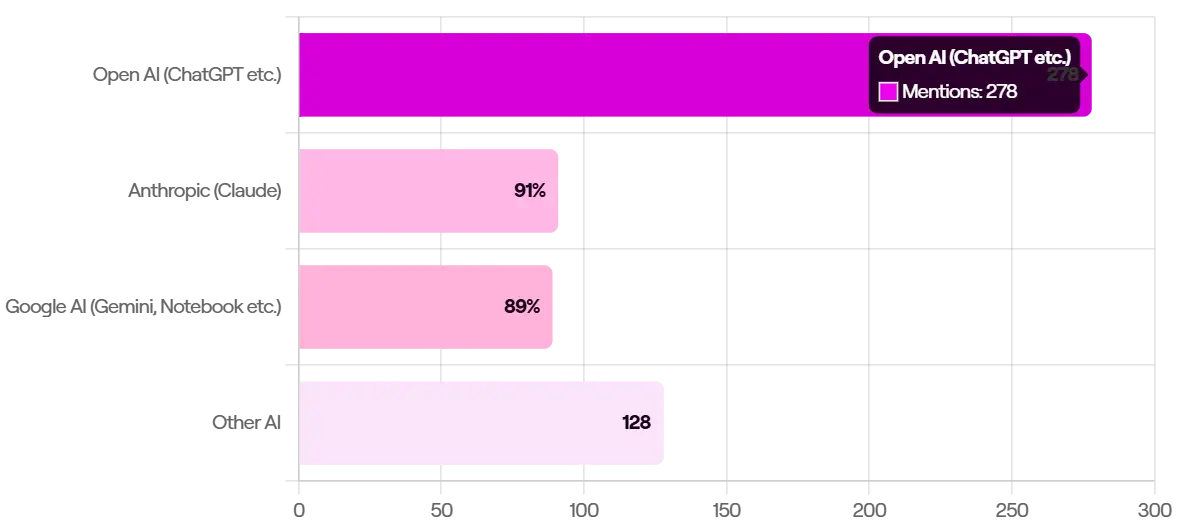
Leading AI Solutions for Web Professionals
OpenAI's ChatGPT remains the primary tool for 278 agencies, though Claude and Google Gemini are rapidly gaining ground.
Chapter 6: Growth Strategies – Winning the Competitive Edge in a Saturated 2026 Market
How does a digital agency grow in 2026 when the barriers to entry have been lowered by AI, yet the barriers to success have never been higher? The market is no longer a “shouting match” where the loudest ad spend wins. Instead, the 2026 growth strategy is rooted in Smarter Systems and Deeper Human Relationships. As we move through this decade, the agencies that thrive are those that prioritize their reputation over their reach, and their internal automation over their external appearances.
6.1 The Lead Acquisition Paradox: Why Volume Does Not Equal Value
According to the Elementor survey, acquiring new leads remains the undisputed top challenge for 40% of all agencies globally. For solo freelancers, this pressure is even more intense, with 45% struggling to find consistent work. As a business owner or marketing director, this results in a daily deluge of cold pitches in your inbox. This “lead acquisition paradox” means that while more people *can* build websites, fewer can build them *well*.
Separating the professionals from the noise in 2026 requires looking past the portfolio. You must evaluate an agency’s ability to act as a Strategic Growth Partner. At Low Cost Web Agency, we have intentionally shifted away from aggressive cold-selling to focus on high-intent inbound inquiries. We believe that if you provide enough value upfront—through deep-dive guides like this one—the right clients will find you. In 2026, the best way to find a partner is not through a sponsored ad, but through demonstrated authority.
6.2 Referral Networks: The Unshakable Core of Digital Trust
Despite the overwhelming sophistication of digital marketing and AI-driven targeting, the most powerful growth engine in 2026 remains ancient: The Client Referral. A staggering 54% of agencies cite referrals as their primary source of new business, followed by professional networks at 23%. Surprisingly, organic search and social media—while vital for branding—only account for a combined 12% of final client acquisition.
This data confirms a fundamental truth: The web is built on reputation, not just algorithms. At Low Cost Web Agency, our growth over the last decade has been fueled by the results we deliver for a loyal, global community. When a client refers us, they aren’t just passing on a contact; they are putting their own reputation on the line to vouch for our 32 years of international expertise. In a world where AI can generate a fake portfolio in seconds, real-world testimonials and long-term relationships are the only true proof of quality.
6.3 Retainers vs. One-Off Builds: The Shift to Predictable Success
The industry is rapidly moving away from the “one-off” website build model. The goal for any high-performing agency in 2026 is the Monthly Retainer. Currently, 70% of Established Agencies and Scaled Solos have adopted this model. Why? Because a website that is launched and then ignored is a depreciating asset.
Whether it is technical SEO maintenance, ongoing content generation, or conversion rate optimization, the retainer model ensures that your digital presence is constantly evolving to meet market demands. For the client, this means predictable costs and a partner who is constantly “under the hood” of your website. We encourage our clients to view the website launch as the *beginning* of the journey, not the end. Our long-term partnerships ensure that your site never stagnates, maintaining its speed, security, and ranking position year after year.
6.4 Hiring for 2026: The New Professional Standards
When agencies look to expand their teams today, they aren’t looking for simple “coders” or “designers.” The requirements have shifted toward specialized, high-level roles that AI cannot easily replicate. If you are evaluating an agency, look at who they are hiring:
- AI and Automation Specialists (56%): These experts don’t just use AI; they build custom internal workflows to drive production efficiency. This is how we keep our prices “Low Cost” while maintaining “Premium” speed.
- Sales and Strategy Consultants (47%): Clients in 2026 need business advisors. Agencies are hiring people who understand supply chains, international purchasing, and business logic—skills that Alexandre Menini has mastered over 32 years.
- UX and Universal Accessibility Pros (47%): As digital laws tighten globally, ensuring a site works for every user (regardless of ability) is a critical technical requirement. We hire experts who ensure your site is compliant and inclusive by design.
This hiring shift reflects the industry’s maturation into Strategic Consulting. We have moved past being mere “builders” to becoming architects of digital success. When you work with an agency in 2026, you aren’t just paying for hours of labor; you are paying for a sophisticated infrastructure of technology and human expertise designed to help your business scale.
Primary AI Use Cases in Web Workflows
Text and code generation are nearly universal, while Agentic AI (automated task execution) has reached a 27.8% adoption rate.
Impact of AI on Workflow Automation
Over 50% of agencies have replaced at least 10% of their manual workflow with AI-driven automation.
Chapter 7: The Client’s Survival Guide – Navigating the Agency Landscape in 2026
In 2026, the process of selecting a web agency has moved far beyond comparing line-item price lists or looking at portfolio screenshots. The digital market has matured into a complex ecosystem where operational maturity is the only metric that guarantees a return on investment. As the Elementor report highlights, the market is currently saturated with “Emerging Agencies”—firms that look professional on the surface but are structurally fragile. Choosing the wrong partner today doesn’t just mean a poor website; it means missed market opportunities and technical debt that can haunt your business for years.
7.1 Understanding the “Emerging Agency” Risk Factor
The 2026 data reveals a startling statistic: 14% of the global market consists of “Emerging Agencies.” These are typically firms that have scaled too quickly, hiring staff and renting expensive office spaces before establishing efficient, automated workflows. To cover their ballooning overhead, they often engage in aggressive pricing—charging low “freelancer” rates while trying to support “corporate” payrolls.
For the client, this creates a high-risk environment. These agencies are prone to project abandonment, high staff turnover (meaning your project lead might change three times in two months), and a sharp decline in quality as they rush to finish projects to stay cash-flow positive. At Low Cost Web Agency, we have intentionally bypassed this trap. By remaining a lean, expert-led powerhouse for over a decade, we have stabilized our processes. We don’t “learn” on your time or your budget. Instead, we deliver results based on 32 years of international purchasing and digital expertise, providing the stability of a giant with the agility and price point of a boutique firm.
7.2 Critical Questions to Vet Your Partner in 2026
To identify a truly forward-thinking agency that will keep you competitive through 2026 and beyond, you must look for technical depth. Ask your prospective partner these three questions:
- “How do you use Agentic AI to monitor my site’s health?” A modern agency should have autonomous agents monitoring your uptime, speed, and security 24/7, not just waiting for you to report a bug.
- “What is your strategy for SGE (Search Generative Experience) optimization?” In 2026, if they are only talking about keywords and not about “AI-readiness” and semantic authority, they are using a 2022 playbook.
- “Do you provide integrated hosting and maintenance, or is it outsourced?” The report shows that 98% of top-performing agencies now bring these services in-house to ensure accountability. If they outsource your hosting to a third party they don’t control, they cannot guarantee your site’s performance or security.
Chapter 8: Why Marketing-Led Development is the Absolute Standard
The traditional wall between “the guys who code” and “the guys who market” has finally collapsed. The most successful businesses in 2026 understand that a website is not a standalone product—it is the digital core of a marketing engine. The Elementor report confirms that Full-Service agencies land projects twice as large because they solve fundamental business growth problems, not just technical requests.
8.1 The Architecture of Conversion: Coding for the Sale
In 2026, a website is no longer a “digital brochure”; it is a conversion machine. Marketing-led development means that every line of code is written with the final sale in mind. This holistic approach involves three critical pillars:
- Search Intent Mapping (SIM): We no longer build pages around what people “type.” We build them around what people “want to achieve.” This involves deep AI analysis of search intent to ensure your site appears at the exact moment a user is ready to buy or engage.
- Semantic HTML and AI-Readiness: AI search agents (like Google’s Gemini or OpenAI’s SearchGPT) “read” your site differently than humans. We use advanced semantic tagging to ensure these AI bots prioritize your content as a high-authority source.
- AI-Driven Conversion Rate Optimization (CRO): Gone are the days of guessing where to put a button. We use AI heatmaps and predictive behavioral modeling to place calls-to-action exactly where users are most likely to click, ensuring your traffic actually turns into revenue.
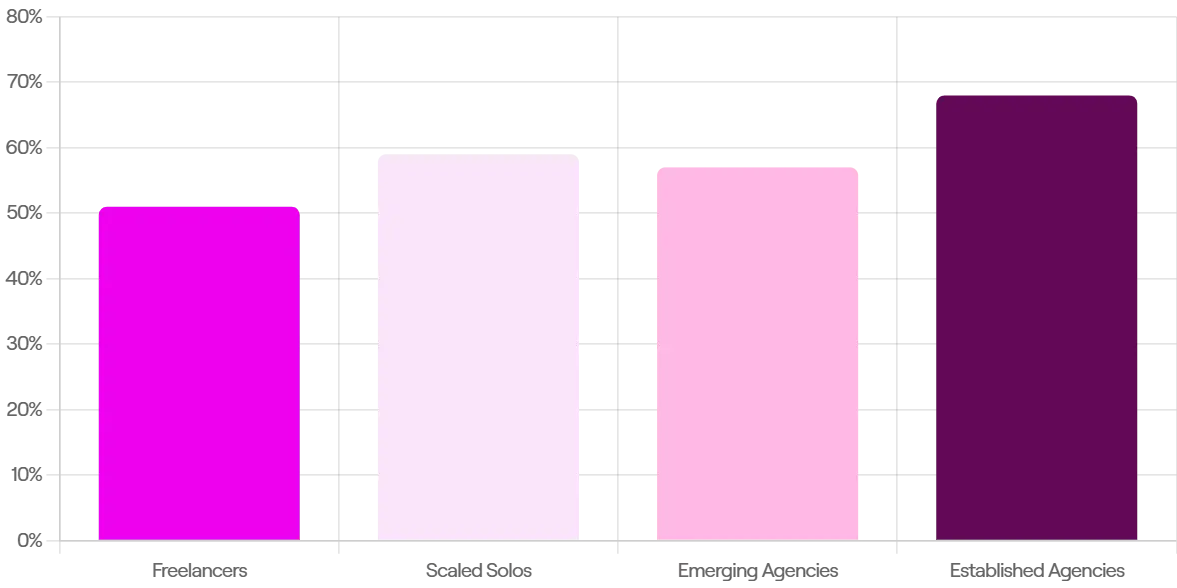
Share of Recurring and Balanced Revenue Models
Established Agencies lead the shift toward stability, with nearly 70% relying on mostly recurring or balanced revenue models.
Chapter 9: The eCommerce Revolution – Mastering Frictionless Transactions
With 35% of all agency work now centered on eCommerce, the digital storefront has become the primary battleground for SMBs. In 2026, the technical barrier to entry is low, but the strategic barrier to success is incredibly high. The goal for every online merchant today is “Frictionless Commerce.”
9.1 Omnichannel Synchronization and Social Commerce
Your website is no longer the only place where you sell. In 2026, it must act as the “command center” for a multi-channel ecosystem. Whether you are promoting a local brand like “Pondicherry je t’aime” or a global service, your site must sync perfectly in real-time with Instagram Shops, TikTok Marketplace, and WhatsApp Business.
Agencies that excel in this area use advanced automation to manage inventory, pricing, and customer data across all these channels simultaneously. This ensures that a customer buying through a social media link has the same high-quality experience as one visiting your homepage. At Low Cost Web Agency, we specialize in this “omnichannel” flow, ensuring that your French-inspired branding and business logic remain consistent, whether your customer is in Paris, Pondicherry, or New York. The 2026 consumer demands speed, consistency, and zero friction—and that is exactly what our architecture provides.
Chapter 10: Conclusion – The Future is Human-Led and AI-Powered
The Elementor 2026 report serves as more than just a statistical summary; it is a definitive manifesto for the next decade of the digital economy. The overarching narrative is clear: the agencies that will survive and thrive are those that successfully merge high-tech automation with high-touch human expertise. We are moving away from an era where “coding skills” were the primary value proposition. In 2026, value is found in strategic synthesis—the ability to look at a mountain of AI-generated data and say, “This is the path that will actually grow your business.”
As digital projects become more multi-layered and timelines continue to shrink, the margin for error has vanished. Clients no longer have the luxury of waiting six months for a website that might be obsolete upon arrival. They need partners who can navigate the complexities of SGE, omnichannel commerce, and agentic workflows with confidence. AI is undoubtedly the high-performance engine of 2026, but Human Experience remains the steering wheel, the brakes, and the navigator. Without it, you are simply accelerating in an unknown direction.
Appendix: 32 Years of Global Perspective – The Pondicherry Advantage
Data can tell you what is happening in the market, but only experience can explain why and, more importantly, how to react. Alexandre Menini’s 32-year professional journey is not just a timeline; it is a repository of lessons learned across international purchasing, expatriation, and digital management. This “Expert Factor” is what transforms a standard website build into a strategic business asset.
Why the “Pondicherry Hybrid” Model Wins in 2026
Pondicherry, India, is far more than a picturesque coastal town; it is a unique strategic hub that allows Low Cost Web Agency to offer a value proposition that European or American-based firms simply cannot match. By operating from this cultural and technical crossroads, we offer our clients a “Best of Both Worlds” scenario:
- Uncompromising European Standards: Our roots are in the French professional aesthetic. We provide strict adherence to GDPR compliance, Western business ethics, and a design philosophy that prioritizes elegance and clarity. Your brand identity, like our own “Pondicherry je t’aime”, remains untranslated and untarnished in its sophistication.
- Global Technical Scalability: India remains the world’s powerhouse for AI development and high-level engineering. By being positioned here, we have immediate access to the “Vibe Coders” and Automation Specialists who are building the tools of tomorrow.
- Radical Cost-Efficiency: We leverage the local economic landscape to drive down operational overhead. This allows us to offer “Low Cost” pricing—not by cutting corners or using cheap labor, but by optimizing our procurement and infrastructure. You get “High End” agency quality at a price point that respects your bottom line.
Chapter 11: The 2026 Digital Glossary – Mastering the New Web
To navigate the 8,000-word depth of this guide and the broader 2026 market, you must be fluent in the language of the modern web. Here are the expanded definitions of the technical pillars mentioned in this report:
1. Agentic AI (Autonomous Workflows): Move beyond “Chatbots.” Agentic AI refers to systems designed to achieve specific goals autonomously. Whether it’s an SEO agent that monitors your rankings and automatically tweaks meta-data, or a security agent that patches vulnerabilities in real-time, these systems reduce human manual labor by up to 60%, ensuring your site is always one step ahead.
2. Vibe Coding (Natural Language Architecture): A revolutionary approach to development where the architect “vibes” with the AI using natural language to build complex logic. This isn’t just “no-code”; it is “high-code” executed at the speed of thought. It allows us to build custom functionalities in days that used to take months.
3. SGE & Zero-Click Optimization: Search Generative Experience has changed the face of Google. In 2026, your content must be optimized for AI snapshots. We focus on “Entity-Based SEO,” ensuring that AI models recognize your brand as the primary authority in your niche, capturing traffic even when users don’t click through to a traditional link.
4. WCAG 2.1 & 2.2 Compliance (Universal Accessibility): In 2026, web accessibility is both a legal mandate and a business necessity. We build sites that are inclusive by design, ensuring that every user—regardless of physical or cognitive ability—can navigate your store or service. Accessibility is also a major ranking factor in the modern search era.
5. Semantic HTML5 & Schema.org: The “hidden” language of the web. We use advanced schema markup to ensure that every piece of data on your site (prices, reviews, locations) is perfectly understood by AI crawlers, giving you a massive advantage in rich search results.
Ready to Future-Proof Your Business?
The 2026 landscape waits for no one. Whether you need a new build, a strategic SEO overhaul, or an AI-integrated eCommerce machine, let’s turn these insights into your competitive advantage.