
Organic search acquisition is no longer governed by manual writing speed. In modern digital publishing, search visibility requires semantic completeness, entity density, and systematic content architecture. Engineering an editorial pipeline around **AI writing** enables engineering teams, SEO directors, and digital agencies to scale indexable assets while maintaining rigorous editorial standards.
Deploying generative models for organic growth involves far more than running raw prompts through consumer interfaces. It demands a production-grade infrastructure: dynamic retrieval-augmented generation (RAG), programmatic schema validation, entity extraction, and continuous post-processing.
—
Algorithmic Foundations: How Modern Search Engines Process AI Writing
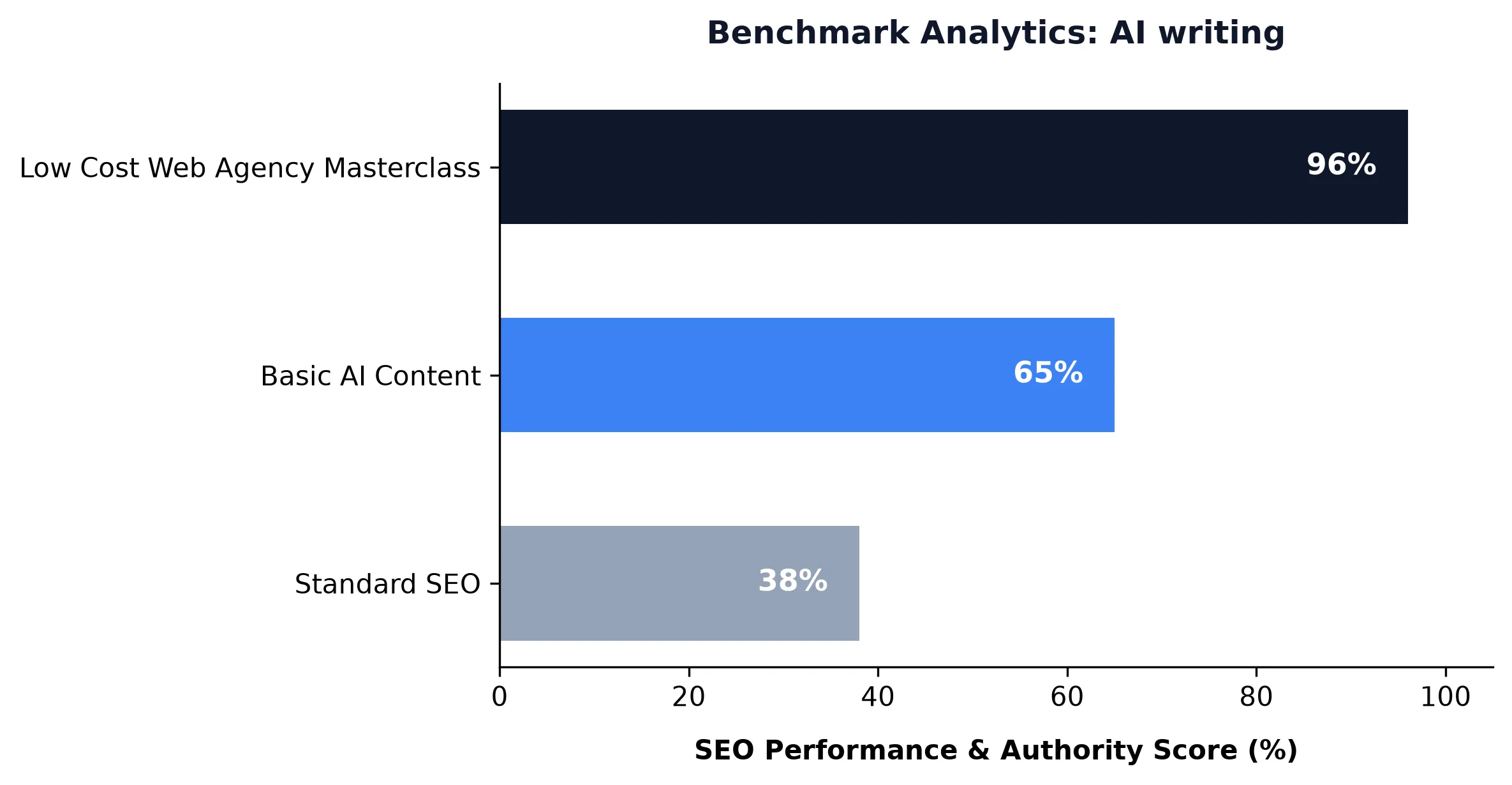
To dominate SERPs (Search Engine Results Pages), engineers must understand how Information Retrieval (IR) systems evaluate machine-generated copy. Search engines do not penalize content simply because an algorithm assembled the sentences. As outlined in the Google Search Central documentation on helpful content, ranking systems evaluate utility, factual precision, entity association, and user intent fulfillment—regardless of production method.
“`
+———————————————————+
| Modern Search Parser |
+———————————————————+
|
+——————+——————+
v v
+——————+ +——————–+
| Lexical Matching | | Dense Vector Search|
| (BM25/TF-IDF) | | (Embeddings/BERT) |
+——————+ +——————–+
| |
+——————+——————+
v
+———————————————————+
| Information Gain & Entity Co-Occurrence Layer |
+———————————————————+
|
v
+———————————————————+
| SERP Rank Calculation |
+———————————————————+
“`
1. Vector Search and Semantic Distance
Search algorithms tokenize copy and map it into high-dimensional vector spaces. Models like BERT, MUM, and their modern open-source equivalents assess the semantic distance between the search query and your document embeddings.
Unrefined **AI writing** often exhibits high predictability (low perplexity and low burstiness). While low perplexity ensures clarity, excessive uniformity signals boilerplate generation to classification systems. Effective implementation requires variable syntactical depth and targeted terminology to score favorably across dense vector passes.
2. Entity Density and Knowledge Graph Alignment
Search bots run Named Entity Recognition (NER) models to extract:
* Primary entities (core concepts, brands, technologies).
* Secondary attributes (specifications, dimensions, contextual definitions).
* Relationship predicates (how entity A connects to entity B).
When constructing copy using automated workflows, models must be instructed to map these specific entities explicitly. A page detailing cloud architecture, for example, must systematically anchor terms like *latency, horizontal scaling, edge nodes,* and *distributed caching* within predictable syntactic structures.
3. Information Gain Scores
Patents filed by major search engines measure “Information Gain”—the delta of novel information a URL introduces relative to pages the user has already visited for that query cluster. Generic automated content rehashes the top 10 results, yielding an information gain score near zero.
High-visibility automated systems inject unique data attributes, specialized calculations, proprietary survey results, and fresh case studies directly into the model context to bypass algorithmic downranking.
—
Pipeline Architecture: Moving Beyond Simple Prompts
Relying on a single prompt to generate an entire commercial page produces generic, low-ranking prose. High-performance **AI writing** systems utilize a multi-stage directed acyclic graph (DAG) pipeline.
“`
[SERP Scraping & NER Extraction]
│
▼
[Semantic Gap & Vector Analysis]
│
▼
[Multi-Step Prompt Chaining (DAG)] ────► [Structured Schema Injection]
│
▼
[Fact-Checking & Entity Audit]
│
▼
[Production CMS Engine / Edge CDN]
“`
Ingestion and SERP Decomposition
Before writing a single token, automated systems scrape the top-ranking documents across target queries. Natural Language Processing (NLP) routines decompose these documents to extract:
* Common heading hierarchies (H2, H3 distributions).
* Statistical distributions of core entities.
* Average passage lengths per subtopic.
* Unanswered secondary user questions found within “People Also Ask” structures.
This data builds a dynamic context envelope that guides the LLM during generation.
Context Conditioning and Prompt Chaining
Instead of asking a model to “write an article about X,” the pipeline breaks the task into sequential, specialized calls:
1. **Architecture Phase:** Generates a structured JSON outline mapping every entity and heading.
2. **Expansion Phase:** Iterates through individual sections, ingesting external research parameters and programmatic data points.
3. **Synthesis Phase:** Resolves transitions, aligns structural voice, and guarantees terminological consistency across the document.
4. **Enrichment Phase:** Injects structured data (JSON-LD schemas, comparison tables, code blocks).
This modular methodology mirrors the strategies detailed in Ai-crafted content: the future of seo and web design mastery, where structural discipline is central to organic search success.
—
Technical Execution: Orchestrating Models for Search Performance
Choosing the right model family impacts both runtime cost and output quality. High-scale deployments balance frontier models (like Claude 3.5 Sonnet or GPT-4o) with efficient, self-hosted open-weights models (such as Llama 3 or Mistral Large).
| Layer / Task | Preferred Model Class | Target Metric |
| :— | :— | :— |
| **SERP Parsing & Entity Extraction** | Small Open-Source (e.g., Llama 3 8B, spaCy) | Speed, deterministic token handling |
| **Structural Planning & Outline** | Frontier Model (GPT-4o, Claude 3.5 Sonnet) | Complex spatial reasoning, context awareness |
| **Drafting Dense Prose** | High-parameter instruction models | Perplexity balance, vocabulary breadth |
| **Code / Schema Validation** | Specialized code engines | Deterministic syntax accuracy, JSON validation |
Enforcing Deterministic Output via JSON Schemas
To pipe generated copy directly into headless CMS databases (such as Strapi, Contentful, or custom PostgreSQL stores), pipelines must enforce JSON Mode or structured outputs.
“`json
{
“$schema”: “http://json-schema.org/draft-07/schema#”,
“title”: “ArticlePayload”,
“type”: “object”,
“properties”: {
“title”: { “type”: “string”, “maxLength”: 60 },
“meta_description”: { “type”: “string”, “maxLength”: 155 },
“target_keyword”: { “type”: “string” },
“entities_covered”: {
“type”: “array”,
“items”: { “type”: “string” }
},
“sections”: {
“type”: “array”,
“items”: {
“type”: “object”,
“properties”: {
“heading”: { “type”: “string” },
“level”: { “type”: “integer”, “minimum”: 2, “maximum”: 4 },
“body_markdown”: { “type”: “string” },
“key_takeaways”: {
“type”: “array”,
“items”: { “type”: “string” }
}
},
“required”: [“heading”, “level”, “body_markdown”]
}
}
},
“required”: [“title”, “meta_description”, “target_keyword”, “sections”]
}
“`
Deploying strict schemas eliminates formatting errors, strips unwanted conversational preamble, and ensures the downstream pipeline receives clean data ready for compilation.
Precision Generation of Metadata
Title tags and meta descriptions remain the primary drivers of click-through rate (CTR) in search results. Leaving these tags to simple model summaries produces passive, generic copy that fails to drive traffic.
System prompts must be configured to generate multiple metadata variations, scored algorithmically against CTR factors: active verbs, primary keyword placement, brand anchors, and character counts. To refine this specific component of your pipeline, examine Ai-crafted meta descriptors: the secret sauce for instant visibility boost.
—
Bridging Copywriting with UI/UX: Layouts That Convert
Indexed content delivers zero commercial value if users bounce immediately. Algorithmic ranking systems actively monitor user interactions—such as dwell time, scroll depth, and subsequent search refinements. If a generated article presents an unformatted wall of text, visitors bounce back to the SERP, sending negative signals to the ranking algorithms.
“`
[Raw AI Generation]
│
▼
[Dynamic Layout Engine]
├── Hero Component with Target H1
├── Interactive Summary Box (Immediate Answer)
├── Structured Comparison Table (High Dwell Time)
└── Modular Action Cards (Conversion Anchors)
│
▼
[Optimized User Experience & Engagement Signals]
“`
Micro-Content Formatting and Scannability
Transforming raw **AI writing** into a high-converting web asset requires dynamic front-end components:
* **Direct Answer Blocks:** Position direct definitions or quick solutions at the top of the content to satisfy quick-lookup queries and secure featured snippets.
* **Semantic Comparison Tables:** Convert complex comparative sentences into structured HTML/Tailwind tables. Tables increase dwell time and are favored by search indexers.
* **Actionable Aside Modules:** Parse informational steps into numbered process sequences with distinct UI highlights.
The visual execution of content is as decisive for conversions as the copy itself. Integrating these generation pipelines directly into adaptable, conversion-optimized front-end frameworks is detailed in Revolutionizing web design: ai-powered layouts that convert visits into sales.
—
Programmatic SEO at Scale: Dynamic Templates and Edge Execution
Programmatic SEO combines structured datasets with algorithmic text generation to construct thousands of landing pages targeting long-tail query variations. Typical applications include directory listings, integration pages, geographic landing hubs, and product comparison engines.
“`
+———————————————————–+
| Relational Database / Warehouses |
| (e.g., City Stats, Product Metrics, APIs) |
+———————————————————–+
│
▼
+———————————————————–+
| Edge Worker Engine (Cloudflare / Vercel) |
| – Compiles DB metrics with dynamic AI context layers |
| – Applies local edge caching (Stale-While-Revalidate) |
| – Injects dynamic localized schema markup |
+———————————————————–+
│
▼
+———————————————————–+
| Search Crawler: Indexes Unique, High-Utility |
| Programmatic Pages at Scale |
+———————————————————–+
“`
Avoiding the “Thin Content” Pitfall
Historically, programmatic pages relied on rigid templates where only a few variables (such as city or product name) changed. Modern search systems easily detect these templates, classifying them as thin or doorway pages and removing them from index coverage.
By integrating contextual models into the programmatic loop, you can dynamically vary the narrative structure, write unique introductory analyses based on underlying page metrics, and generate customized conclusions.
For an in-depth breakdown of scaling this pipeline without indexing penalties, review the framework in Ai-powered content magic: instantly boost your website’s visibility with automated copywriting wizards.
Edge Rendering and Performance Considerations
Core Web Vitals directly affect search visibility. When generating copy at scale, avoid dynamic LLM generation directly inside the client-side request-response cycle. Rendering runtime LLM text on the fly adds multiple seconds of latency, destroying Time to First Byte (TTFB) and Largest Contentful Paint (LCP) scores.
Use an asynchronous, event-driven architecture:
1. Update content asynchronously via webhooks or scheduled batch jobs.
2. Render pages to static HTML at build time or cache them within edge CDN networks using stale-while-revalidate strategies.
3. Serve pre-compiled pages with response times under 100ms.
—
Content Optimization and Quality Governance Pipelines
Scaling an automated publishing pipeline without a continuous optimization loop creates technical and editorial debt. Factual drift, outdated statistics, and entity decay can degrade your site’s organic footprint over time.
Deploying proactive, automated maintenance workflows ensures long-term rankings. The broader principles of lifecycle content adjustments are documented in Revolutionizing your website with ai-powered content optimization techniques.
“`
┌────────────────────────────────────────────────────────┐
│ Continuous Audit Loop │
└────────────────────────────────────────────────────────┘
│
┌──────────────────┴──────────────────┐
▼ ▼
┌───────────────────────┐ ┌───────────────────────┐
│ Search Console Sync │ │ Vector Cosine Check │
│ (Tracks CTR & Rank) │ │ (Detects Content Drift│
└───────────────────────┘ └───────────────────────┘
│ │
└──────────────────┬──────────────────┘
▼
┌───────────────────────────────────────────────────────────┐
│ Dynamic Regeneration Worker │
│ (Updates entities, refines facts, and resubmits sitemaps) │
└───────────────────────────────────────────────────────────┘
“`
Automated Verification Framework
Before pushing generated copy to production, run it through automated validation gates:
* **Hallucination Detection via Dual Verification:** Compare factual assertions, metrics, and citations against source data using a secondary, temperature-zero validation pass.
* **Semantic Vector Distance Checks:** Calculate the cosine similarity between your draft’s vector embeddings and the embeddings of the top three ranking SERP competitors. If similarity falls below 0.78, the text misses key topical expectations. If it exceeds 0.98, it risks algorithmic filtering for lack of original information gain. Aim for a target band between 0.82 and 0.90.
* **Anchor Text and Graph Verification:** Confirm that internal links match verified target URLs within your CMS database. Programmatic models can hallucinate dead URLs or create unhelpful anchor phrases; run all generated links through a strict internal whitelist parser.
—
Building an Automated Copywriting Engine
The following implementation guide details the construction of a production-grade copywriting pipeline using Node.js/Python, OpenAI/Anthropic APIs, and headless CMS webhooks.
Step 1: Ingest SERP Intent and Extract Entities
Fetch top competitors using an established SERP API. Extract all headings, run a natural language entity recognizer, and compile a frequency distribution of essential topical phrases.
“`python
# snippet: entity_extraction_pipeline.py
import spacy
from collections import Counter
nlp = spacy.load(“en_core_web_md”)
def extract_serp_entities(competitor_texts):
combined_text = ” “.join(competitor_texts)
doc = nlp(combined_text)
# Filter for technical, product, and organizational entities
valid_labels = {“ORG”, “PRODUCT”, “GPE”, “NORP”, “FAC”}
entities = [ent.text.lower() for ent in doc.ents if ent.label_ in valid_labels]
# Return top 25 high-frequency entities
return [item[0] for item in Counter(entities).most_common(25)]
“`
Step 2: Construct the Structured Execution Prompt
Use a strict system prompt that enforces professional technical tone, excludes generic buzzwords, and mandates output in a machine-readable JSON structure.
“`markdown
SYSTEM PROMPT:
You are a senior technical copywriter and programmatic SEO specialist.
Generate a comprehensive, highly authoritative technical article based on the provided brief.
RULES:
1. Do not use generic conversational transition terms or empty marketing hyperbole.
2. Maintain an authoritative, direct, and instructional tone throughout.
3. Organically integrate every item listed in REQUIRED_ENTITIES.
4. Output must match the requested JSON schema exactly. Do not wrap output in introductory markdown commentary.
INPUT PARAMETERS:
– PRIMARY_KEYWORD: AI writing
– TOPIC: Automated Editorial Production Infrastructure
– REQUIRED_ENTITIES: [“vector search”, “information gain”, “BM25”, “embeddings”, “schema validation”]
“`
Step 3: Run Generation and Enforce Quality Controls
Execute the generation through the model API, parse the JSON payload, and run syntax checks along with entity compliance validation.
“`python
# snippet: generation_controller.py
import json
from openai import OpenAI
client = OpenAI()
def generate_optimized_asset(prompt_payload):
response = client.chat.completions.create(
model=”gpt-4o-2024-08-06″,
response_format={“type”: “json_object”},
temperature=0.3, # Low temperature ensures strict structural adherence
messages=[
{“role”: “system”, “content”: prompt_payload[“system”]},
{“role”: “user”, “content”: prompt_payload[“user”]}
]
)
article_data = json.loads(response.choices[0].message.content)
# Entity Assertion Test
body_flat = ” “.join([sec[“body_markdown”] for sec in article_data[“sections”]])
for entity in prompt_payload[“required_entities”]:
assert entity.lower() in body_flat.lower(), f”Missing required entity: {entity}”
return article_data
“`
Step 4: Inject Schema and Push to CMS
Transform the validated JSON object into structured markdown, append dynamic JSON-LD markup (such as `Article` and `TechArticle` schemas), and publish the asset directly to your CMS endpoint.
—
Measuring Performance: Key Tracking Metrics
To evaluate an automated editorial pipeline, track these four technical metrics rather than simply counting published words:
1. Crawl-to-Index Ratio
* **Definition:** The percentage of generated URLs crawled by search spiders that progress successfully to “Indexed” status in Google Search Console.
* **Benchmark:** Over 85%. A high volume of pages stuck in “Discovered – currently not indexed” signals content redundancy, thin utility, or internal link distribution failures.
2. Entity Alignment Score
* **Definition:** The overlap between your target topical entity list and the entities Google extracts from your page (visible via Google Cloud Natural Language API checks).
* **Benchmark:** Over 75% alignment between mapped query intent and detected document topics.
3. Click-Through Efficiency (CTR vs. Position Expected)
* **Definition:** Actual organic CTR compared to standard baseline CTR curves for your ranking position.
* **Benchmark:** A positive variance indicates that automated metadata effectively targets user search intent.
4. Index Decay Rate
* **Definition:** The rate at which an indexed programmatic page loses rank or impressions after its initial surge.
* **Benchmark:** Zero decay across 90 days. Rapid decay indicates that initial algorithmic evaluation identified weak engagement or low information gain during initial user visits.
—
The Strategic Path Forward
Building an organic acquisition engine powered by **AI writing** is an infrastructure challenge, not a creative writing experiment. Teams that approach automated copywriting as a structured software pipeline—combining competitive data ingestion, precise prompt chaining, deterministic schema validation, and front-end optimization—achieve dominant, durable search visibility.
Focus on system architecture, treat editorial output with the same rigorous testing applied to software code, and build publishing engines that provide measurable utility to end users on every page.
Ready to Scale Your Digital Infrastructure?
Don’t let technical bottlenecks stall your growth. Discuss your project around Ai-powered content magic: instantly boost your website’s visibility with automated copywriting wizards directly with our senior experts at Low Cost Web Agency.