
You post on social media, send a newsletter, run a small ad and keep your Google Business Profile up to date. Then a customer buys, and you have no idea which of those efforts made it happen. Solving that puzzle is what marketing attribution is about: working out which of your activities deserve credit for a sale, a booking or a phone call. The good news is that you do not need expensive software or a data team. A handful of free habits and one analytics account will take you most of the way.
Why Clicks Alone Mislead You
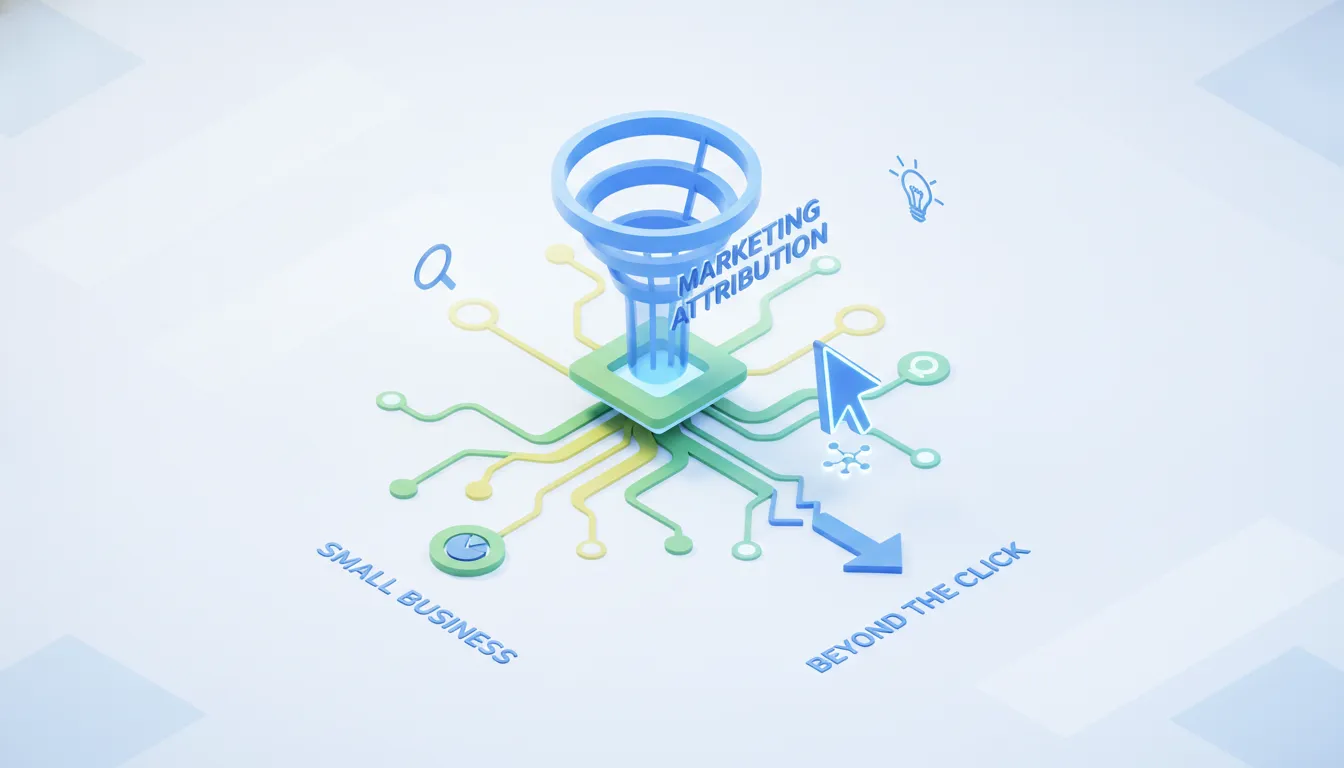
Think of a click counter as the people counter at the door of a shop. It tells you how many people walked in, but not who bought something, who only wanted to use the restroom and who came because a friend recommended you. Clicks measure interest. They do not measure results.
There is a second problem: the journey to a purchase is rarely a straight line. Someone might see your Instagram post on Monday, search for your business name on Wednesday and type your web address directly on Saturday. Your analytics will probably credit the last visit, and Instagram, which started the whole thing, gets nothing.
Some of your best customers never show up in the numbers at all. They hear about you from a neighbor, see your flyer, call you from a directory listing or visit the shop in person. Privacy settings and cookie choices also mean that some website visits are never recorded. No single tool sees everything, so the goal is not a perfect picture. The goal is a good enough picture to decide where your next hour or euro should go.
What Marketing Attribution Really Means
Think of a detective solving a case. One clue, such as a footprint, rarely proves anything. But footprints, a witness statement and a receipt together tell a convincing story. Good marketing attribution for a small business works the same way. You combine digital footprints (tagged links and analytics reports) with what customers tell you directly (survey answers and coupon codes).
Big companies use complex models that split credit between many touchpoints. You can skip that. Your question is simpler: where do my customers seem to come from, and which channels are worth more of my time?
Pick the Results You Want to Count
Before tagging anything, decide what counts as a win. Choose two or three outcomes that are closely tied to revenue. Clicks and page views are not on that list. Typical examples include:
- An online purchase or a paid booking
- A contact form or quote request
- A phone call or a tap on your phone number
- A coupon redeemed in the shop or online
- A newsletter signup, if email is a major source of your sales
In Google Analytics 4, these outcomes are set up as key events (called conversions in some versions). If you are unsure how to set them up, ask whoever manages your website to do it once. After that, every report can show not only how many visitors came from a channel, but how many of them did something that matters.
Tag Your Links With UTM Parameters
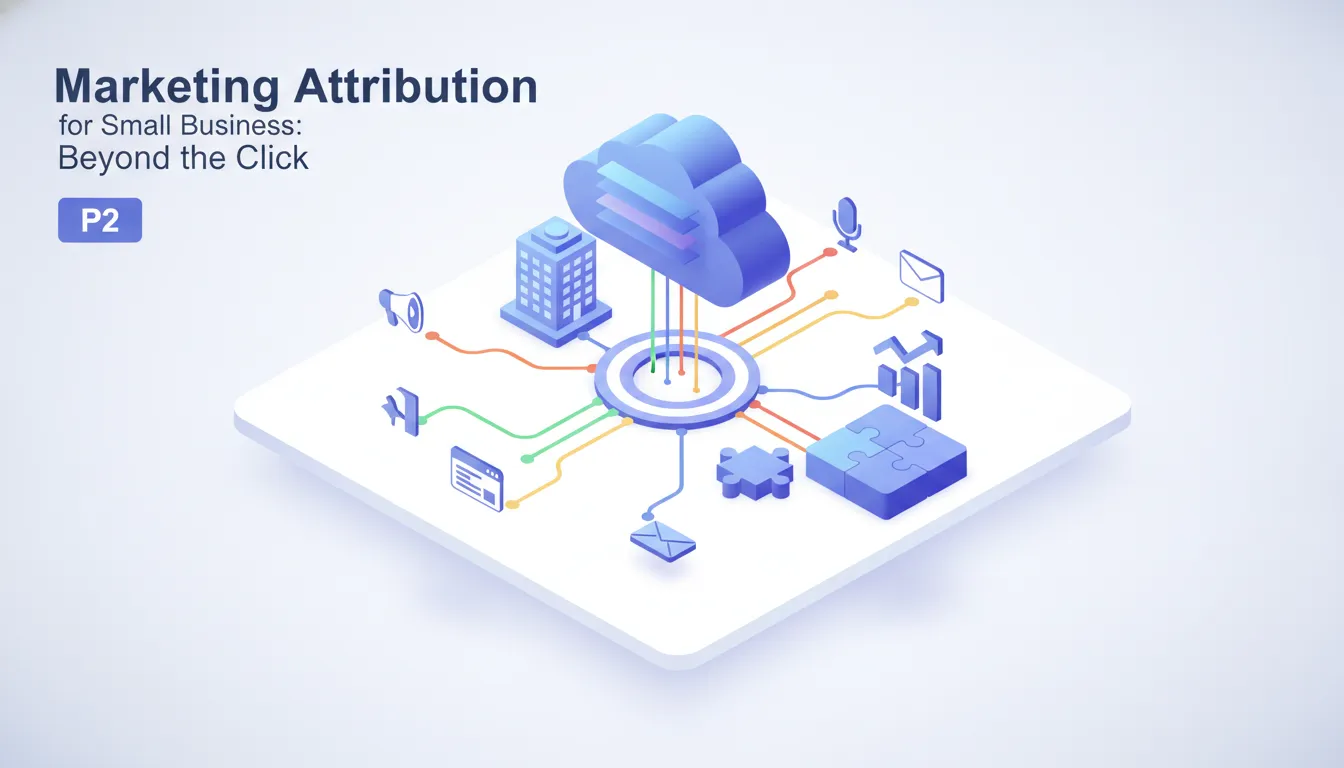
A UTM tag is like a sticker on a parcel. It is a short piece of text added to the end of a link that tells your analytics where that link was shared. When someone clicks a tagged link, Google Analytics reads the sticker and files the visit under the right channel instead of guessing.
You only need three tags to get started:
A complete link might look like this: https://yoursite.com/spring-sale?utm_source=newsletter&utm_medium=email&utm_campaign=spring-sale. You do not need to write these by hand. Google offers a free campaign URL builder, and a simple spreadsheet works just as well.
Naming Rules That Save You Headaches
- Use lowercase only. Analytics treats
Instagramandinstagramas two different sources. - Avoid spaces. Use hyphens, such as
spring-sale. - Pick one name per channel and stick to it. Do not mix
facebook,fbandFacebook. - Keep a shared sheet listing every tagged link, the date and where you used it.
- Never tag links that point from one page of your own website to another. This can overwrite the real source of the visit.
Tagged links are most useful in places where the source is otherwise hidden: your newsletter, your social media profile link, your email signature, QR codes on printed material, partner websites and paid ads.
Ask Customers How They Found You
This is the cheapest and most underrated method. Add a question such as ‘How did you hear about us?’ wherever a customer makes contact: the checkout page, the contact form, the booking form, your phone script or the conversation at the counter.
Analytics shows what people clicked. This question shows what people remember, which is often the thing that actually influenced them. A podcast mention, a recommendation from a friend or a local event will never appear in a click report, but customers will tell you about them if you ask.
How to Word the Question
- Use a dropdown with 5 to 8 options that match your real channels, such as Google search, Instagram, a friend or family member, a flyer, and an event.
- Always add an ‘Other’ option with a free text field. The written answers often reveal channels you had not thought of.
- Include ‘I do not remember’ so people do not pick a random answer just to move on.
- Keep it optional and keep it to a single question. Long forms lose customers.
- For phone and in-person sales, keep a simple tally sheet next to the register or phone.
Do not expect these answers to match your analytics exactly. If customers often say ‘Instagram’ while analytics labels the same visits as ‘direct’, that is not an error. It is a clue that people see you on social media first and then come back later by typing your address.
Use Coupon Codes and Dedicated Landing Pages
A coupon code works like a stamp on a loyalty card. When someone uses it, you know for certain which campaign brought them in, even if the sale happened offline. Give each channel its own code: one for your flyer, another for your newsletter and a third for a partner or influencer. Your checkout system or your till will then show which codes were redeemed.
Related options follow the same logic:
- Dedicated landing pages: a simple page such as
yoursite.com/flyerthat you only mention on one printed piece. Visits to that page can only come from that piece. - QR codes with UTM tags: a code on a poster or packaging that opens a tagged link, linking offline material to online behavior.
- Special phone numbers: a separate number for one campaign, if your phone provider offers this at a price that makes sense for you.
- Mention-this offers: for example, ‘Mention this card for a free coffee’, counted by hand.
Coupons have limits. Codes can be shared on discount websites, and a discount may attract bargain hunters you would not otherwise serve. Use them only when you would be happy to offer the deal anyway. If you serve customers nearby, pairing codes with a strong local presence helps even more. Our non-technical guide to local search explains how to be found by people in your area.
Read the Right Google Analytics Reports
Once your tags, key events and survey are in place, you only need to look at a few things in Google Analytics. Menu names change from time to time, so if you cannot find a report, use the search bar at the top of the tool.
- Traffic acquisition report: shows visits grouped by channel, such as Organic Search, Direct, Email, Organic Social, Referral and Paid. Add the source and medium view to see your UTM labels.
- Key events by channel: compare not just how many visitors each channel sent, but how many completed an outcome you care about.
- Landing pages report: shows which pages people see first, which helps you check that your campaign pages are being used.
Two labels deserve explanation. ‘Direct’ is where analytics puts visits it cannot trace, so treat it as a bucket of unknowns, not as proof that people typed your address. ‘Unassigned’ means the tool could not classify the visit, often because of an inconsistent tag. If these two labels are large, review your tagging first.
One more practical note: depending on where you and your visitors are located, you may need consent before analytics cookies are used. This affects how complete your numbers are. Our article on the impact of GDPR on SEO is a good starting point, and you should always check the rules that apply to you. This is another reason why survey answers and coupon codes are valuable: they do not depend on cookies.
Combine the Methods Into a Monthly Routine
Each method covers the blind spots of the others. Here is how they compare:
To make marketing attribution a habit rather than a project, set aside about 30 minutes once a month and follow these steps:
- Step 1: Open the traffic acquisition report for the last full month and note the key events for each channel.
- Step 2: Tally the survey answers from your forms and your counter sheet.
- Step 3: Count how many times each coupon code or landing page was used.
- Step 4: Put all three results next to each other in one spreadsheet, one row per channel.
- Step 5: Look for agreement and for surprises, then decide on one small change for the next month.
Imagine a flower shop that sees little email traffic in analytics, but customers keep writing ‘newsletter’ in the survey and the newsletter code is redeemed regularly. The shop would be wrong to cut the newsletter just because the click numbers look small. If the shop notices that many ‘direct’ visits follow Instagram posts, it knows social media is doing more than the report suggests. The decision comes from several clues, not from one chart.
Common Mistakes to Avoid
- Inconsistent naming: one stray capital letter splits your data into two lines.
- Judging too quickly: a single week of data can mislead. Give each campaign enough time to run its course.
- Ignoring untrackable channels: word of mouth and your reputation matter even if no tool can measure them neatly.
- Asking too many questions: every extra form field costs you some customers.
- Chasing perfection: rough but regular tracking beats a perfect system you abandon after two months.
As your business grows, marketing automation tools can store the source of each contact for you, which makes this routine even easier. Until then, a spreadsheet and a monthly habit are enough.
Final Thoughts: Good Enough Beats Perfect
You do not need a big budget to understand where your customers come from. Tag the links you share so analytics can label them, ask customers a simple question, give each campaign its own code or page, and spend half an hour a month comparing what you find. Together, these small habits turn vague guesses into a clear, practical form of marketing attribution that fits a small business. Start with a single channel this week, such as your newsletter, tag its links, add one question to your contact form and look at the results in a month. You will probably learn something that changes where you invest your time.
Ready to Scale Your Digital Infrastructure?
Don’t let technical bottlenecks slow your growth. Discuss your project around Marketing Attribution for Small Business: Beyond the Click directly with our senior experts at Low Cost Web Agency.