
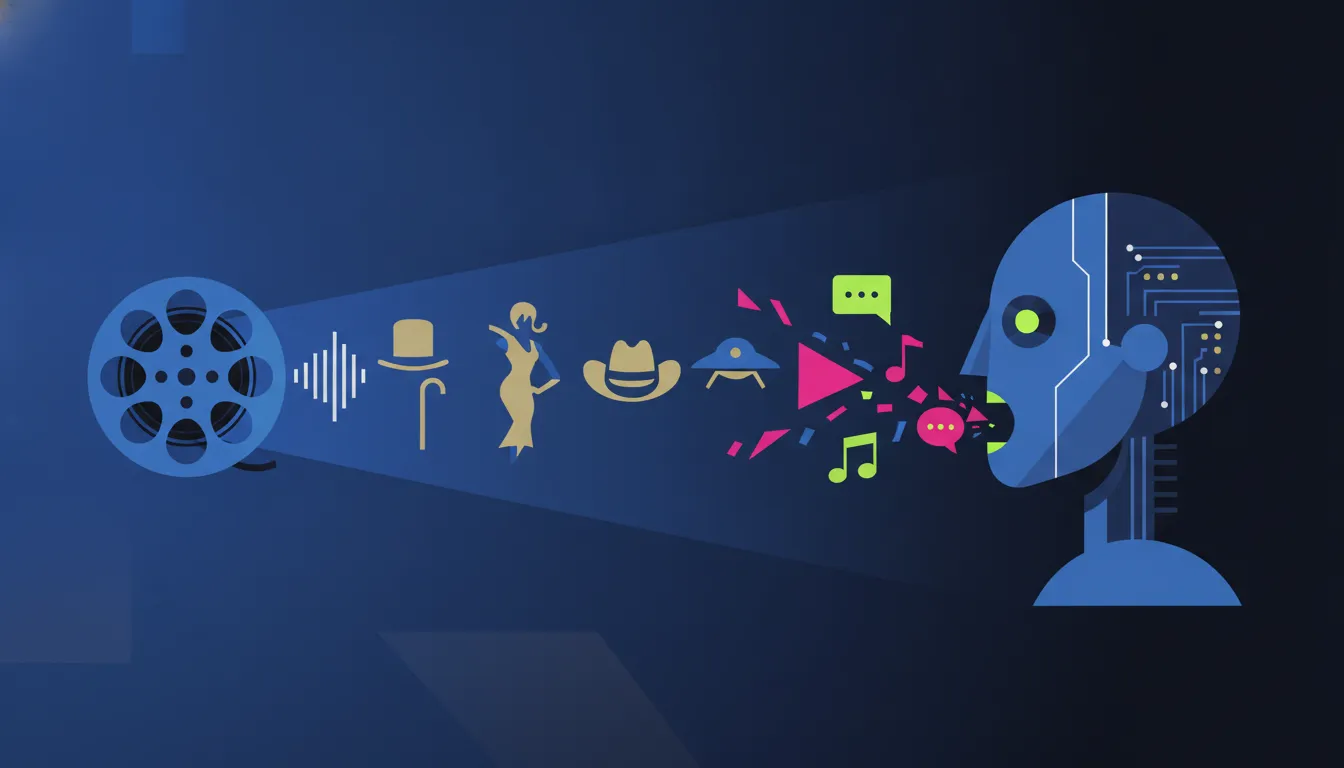
Imagine stepping into an alternate reality where the iconic voices from your favorite classic films are no longer confined to the past. With cutting-edge artificial intelligence (AI) technology, voice actors are now being replaced by digital counterparts that can mimic human tones with uncanny accuracy. This isn’t just a trend; it’s a seismic shift in how we experience and preserve our cinematic heritage.
Consider the case of “Gone with the Wind.” The film has been reimagined using AI to recapture the voices of its legendary cast, including Vivien Leigh as Scarlett O’Hara. While this might sound like science fiction, it’s already happening. Studios are leveraging advanced neural networks and machine learning algorithms to not only replicate existing voices but also enhance them with modern vocal effects.
This technological breakthrough isn’t just about nostalgia; it’s a revolution in the film industry. Traditional voice acting requires months of rehearsal and can be prohibitively expensive for many projects, especially those involving historical or fantasy settings where original recordings are unavailable. AI-powered voice actors offer an unprecedented level of flexibility and cost-effectiveness, making high-quality soundtracks accessible to a broader range of productions.
But the implications go beyond just film. The ability to digitally recreate voices opens up new avenues in education, gaming, and even healthcare, transforming how we interact with technology on a personal level. As AI continues to evolve, the line between human and machine will blur further—perhaps making this not only an era of rebirth for classic films but also a new dawn for interactive media.
The intersection of ai and animation in classic film restoration
The integration of artificial intelligence (AI) into the realm of voice acting has revolutionized how classic films are brought to life. This development not only enhances the viewing experience but also poses significant technical challenges and architectural choices that need addressing.
Enhancing historical authenticity with ai-generated voices
One of the primary applications of AI in this context is the creation of authentic-sounding voices for characters from old movies where original recordings no longer exist or are of poor quality. Techniques such as neural voice synthesis, which uses deep learning models to mimic human speech patterns and intonations, play a crucial role here. These models can analyze existing audio samples, learn the characteristics of the desired voice, and generate new, convincing dialogue.
For instance, researchers at Stanford University have developed systems that can take small snippets of historical recordings and extrapolate them into full-length dialogues with minimal loss in quality or authenticity. This is achieved through a combination of generative adversarial networks (GANs) and recurrent neural networks (RNNs), which work together to create natural-sounding voices.
Architectural choices for seamless integration
The seamless integration of AI-generated voice actors requires careful architectural design, especially considering the need for real-time processing during film restoration projects. A key consideration is the selection between cloud-based versus on-premises solutions. Cloud services offer scalable resources and can handle large datasets efficiently but may introduce latency issues that could disrupt a smooth workflow.
On the other hand, deploying AI models locally allows for faster response times and reduces dependency on internet connectivity. However, this approach demands robust hardware infrastructure capable of handling complex computational tasks without overheating or experiencing downtime due to power outages.
Moreover, ensuring data security is paramount when dealing with sensitive audio content. Both cloud-based and local architectures must implement stringent encryption protocols and secure access controls to protect against unauthorized use or theft of intellectual property.
Concrete solutions for quality assurance
Ensuring high-quality output from AI voice actors involves rigorous testing methodologies. One effective solution is the use of automatic speech recognition (ASR) tools that can evaluate generated dialogue based on parameters such as clarity, emotion, and coherence with context. These tools provide quantitative metrics that help fine-tune models iteratively until they meet desired standards.
Another critical aspect is user feedback loops where human reviewers listen to synthesized voices alongside original recordings or other benchmarks provided by industry experts. This qualitative assessment can highlight areas needing improvement in terms of naturalness, emotional expression, and overall believability.
By combining these quantitative and qualitative methods, developers can continuously refine AI voice generation algorithms until they produce results indistinguishable from those created by human actors.
Conclusion
In summary, the application of advanced AI technologies in voice acting for classic film restoration opens up exciting possibilities while presenting unique technical challenges. Through strategic architectural choices and robust quality assurance practices, these solutions can enhance storytelling experiences significantly without compromising on authenticity or performance. As this field continues to evolve, we can expect even more sophisticated applications that push boundaries further into the realm of interactive entertainment and historical preservation.
Future frontiers awaits
Advancements in AI-powered voice actors herald transformative possibilities for developers, engineers, and tech leaders. This leap propels us towards more immersive experiences across media and entertainment. Expect innovations that blend human emotion with synthetic voices, enhancing storytelling techniques. Developers can leverage these tools to create richer narratives, offering audiences unprecedented engagement. As we step into this new era, the boundaries of what’s possible in voice acting are about to shift dramatically—opening doors for creativity and pushing the envelope on user interaction.