
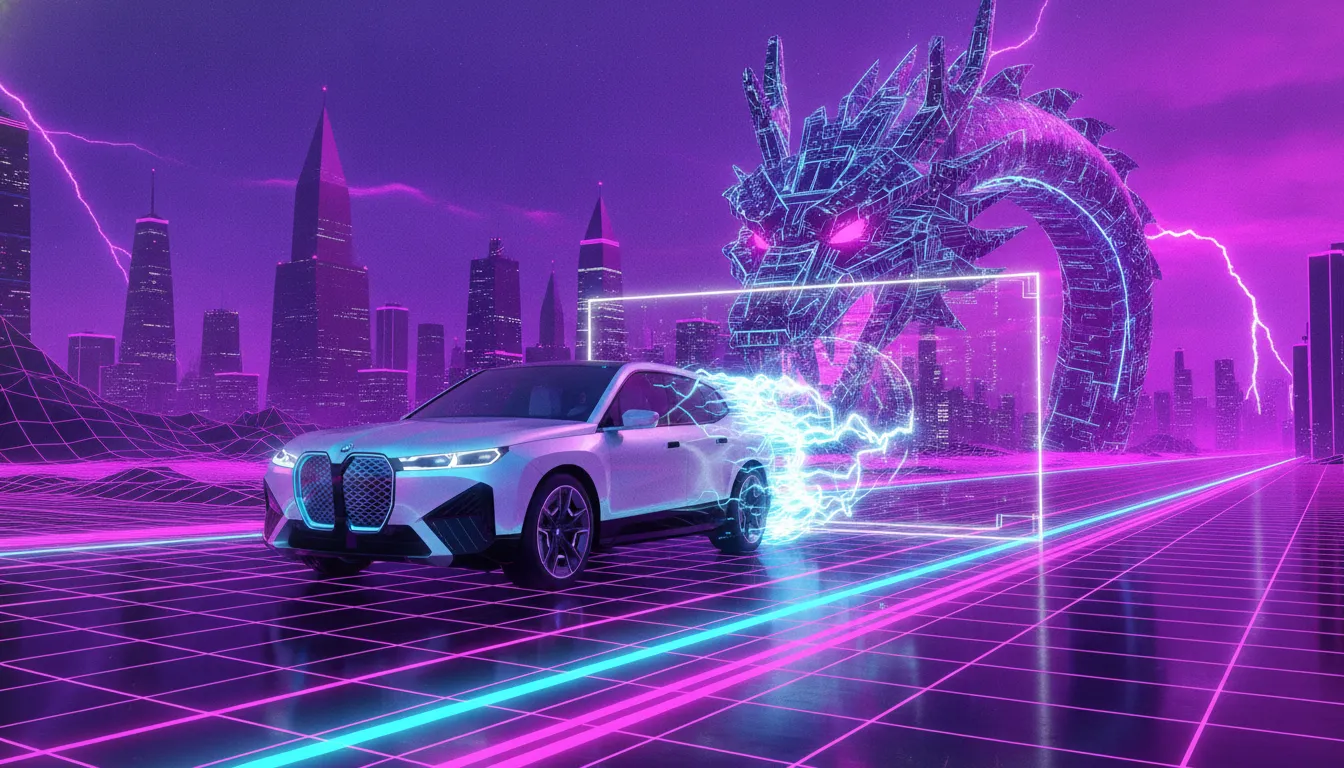
The automotive landscape is undergoing its most significant transformation since the dawn of the internal combustion engine era—a shift that’s not just about electric vehicles (EVs); it’s about redefining mobility itself. In this new battleground, Bmw has unveiled its ix5 model, positioning itself at the forefront of the electric revolution with a bold statement: “Electric driving is no longer an afterthought—it’s the future.” This isn’t merely another eco-friendly option; it’s a challenge to Chinese rivals like Nio and Xpeng who have been quick off the mark in electrifying their fleets.
The ix5’s debut comes at a critical juncture. According to industry analysts, by 2030, electric vehicles are projected to account for over half of all new car sales globally—a staggering shift that Bmw is poised to lead with its innovative technologies and design philosophy. The European automaker has not only committed substantial resources but also integrated cutting-edge battery technology and advanced software platforms into the ix5, making it a formidable contender in this rapidly evolving market.
But what truly sets the ix5 apart? It’s not just about the zero-emission badge or the regenerative braking system; Bmw has reimagined every aspect of electric vehicle ownership. The ix5 boasts an impressive range of up to 600 kilometers on a single charge, outpacing many competitors in this segment. Moreover, its seamless integration with smart home systems and advanced autonomous driving features promises to redefine the concept of travel.
As Bmw steps onto the stage, it’s clear that electric vehicles are no longer just about reducing emissions; they represent an entirely new paradigm in automotive design and user experience. The ix5 is not merely a product but a statement—a declaration of intent by one of the world’s most respected automakers to lead the charge into this electrified future. This battle isn’t just between Bmw and its Chinese competitors; it’s about setting standards for what an electric vehicle should be in terms of performance, technology, and sustainability.
In the coming months, as the ix5 hits showrooms across Europe and beyond, it will undoubtedly spark a new wave of innovation and competition within the industry. For now, one thing is clear: Bmw’s commitment to electric driving marks the beginning of a new era—one where every journey starts with a clean slate.
Core architectural impact
BMW’s new ix5 represents a significant leap in electric vehicle (EV) technology, positioning itself against Chinese rivals through strategic architectural choices and innovative system topologies. At the heart of this innovation lies an advanced modular architecture that integrates both hardware and software components to create a robust and scalable platform for future EVs.
The ix5 employs a dual-motor setup, featuring an asynchronous induction motor on each axle, providing all-wheel drive (AWD) capability with enhanced torque distribution. This configuration is supported by a high-voltage battery pack located beneath the floor, optimizing weight distribution and center of gravity. The battery management system (BMS) utilizes advanced lithium-ion cells, optimized for both performance and longevity through precise temperature control and state-of-charge monitoring.
The ix5’s powertrain architecture also incorporates an integrated starter-generator (ISG), which functions as a secondary electric motor during regenerative braking to capture energy that would otherwise be lost. This system topology ensures maximum efficiency by converting kinetic energy back into electrical energy, thereby extending the overall range of the vehicle and reducing its carbon footprint.
Communication between the various subsystems within the ix5 is facilitated through an advanced data framework based on CAN (Controller Area Network) and LIN (Local Interconnect Network) protocols for low-level control systems. For higher-level functions such as autonomous driving features, BMW has implemented a CAN-FD (Flexible Data-rate) network to support faster data transfer rates without compromising system reliability.
The ix5’s vehicle-to-everything (V2X) capabilities are enabled through an onboard V2X gateway that interfaces with the car’s internal systems and external networks. This gateway supports various communication protocols, including LTE-V for direct vehicle-to-vehicle communications and 5G for connectivity to cloud-based services. The data framework underlying these interactions is designed to handle real-time information exchange securely and efficiently.
BMW has also integrated a sophisticated battery intelligence system that utilizes machine learning algorithms to predict the remaining range of the EV based on various factors such as driving behavior, weather conditions, and traffic patterns. This predictive analytics model relies heavily on an advanced data processing framework that can process large volumes of sensor data in real-time, ensuring accurate range estimates and optimizing energy usage.
The ix5’s infotainment system is powered by a high-performance processor running QNX Neutrino Real-Time Operating System (RTOS). The use of RTOS ensures low-latency performance critical for the seamless operation of autonomous driving features and advanced safety systems. This platform supports real-time data processing, enabling features such as lane-keeping assist and adaptive cruise control to operate with minimal latency.
In summary, BMW’s ix5 achieves its competitive edge through a meticulously designed architectural framework that emphasizes efficiency, integration, and scalability. The dual-motor setup, optimized battery management system, advanced V2X communication protocols, real-time data processing capabilities, and high-performance infotainment systems collectively contribute to creating an EV that not only meets but exceeds the expectations of modern consumers in terms of performance, range, and connectivity.
Technical implementation and engineering challenges
BMW’s new ix5, introduced in 2023, represents a significant leap forward for electric vehicles (EVs) by integrating advanced software development and integration workflows to ensure seamless performance and user experience. The vehicle comes equipped with a state-of-the-art Electric Vehicle Management System (EVM), which leverages an extensive Software Development Kit (SDK) and sophisticated code logic to optimize battery management, drive dynamics, and energy efficiency.
Developer workflow and sdk utilization
The ix5’s development process is meticulously designed around agile methodologies, emphasizing continuous integration and delivery. This approach ensures that the vehicle’s software stack remains up-to-date with the latest advancements in electric drivetrain technology while minimizing downtime during updates or maintenance periods. The core of this workflow involves a robust CI/CD pipeline integrated with tools like Jenkins for automated testing and GitHub Actions for version control.
The SDK utilized by BMW engineers is comprehensive, covering everything from hardware initialization to real-time data processing. It includes pre-built modules for handling sensor inputs (such as LiDAR, radar, and camera data), battery state monitoring, and communication protocols (CAN bus, Ethernet). This modular approach allows developers to focus on specific aspects of the vehicle’s software stack without having to reinvent foundational components.
For instance, when developing a new feature related to energy management, developers can leverage pre-existing modules for battery charge estimation. These modules are built using Python or C++, depending on performance requirements and real-time constraints. The SDK also provides extensive documentation and example code snippets in multiple languages (Python, JavaScript) to facilitate rapid prototyping and development.
Code logic and integration complexities
The ix5’s software architecture is complex due to the integration of various subsystems that need to work seamlessly together. One critical aspect is managing power distribution across different components such as the electric motor, battery pack, and onboard charger. The code logic here involves intricate algorithms for optimizing energy use based on real-time driving conditions (speed, terrain) and user preferences.
Another challenge lies in integrating third-party services like navigation systems and autonomous driving features seamlessly with the vehicle’s core software. This requires careful coordination between different development teams working on these subsystems to ensure that APIs are well-documented and easy to integrate without causing performance bottlenecks.
The integration complexities also extend to managing over-the-air (OTA) updates, which must be robust enough to handle large-scale deployments while maintaining system stability during the update process. This involves developing custom scripts for rolling out updates in stages, monitoring network conditions, and ensuring that critical systems remain operational even when non-critical features are being updated.
Conclusion
BMW’s ix5 showcases a sophisticated approach to integrating software development workflows with advanced electric vehicle technology through its comprehensive SDK and efficient code logic. By leveraging agile methodologies and robust CI/CD pipelines, BMW ensures not only the reliability of their EV but also sets high standards for future iterations in this rapidly evolving field. The complexities involved in managing such an intricate system highlight the critical role that software plays in modern automotive innovation.
Performance metrics and benchmarks
The BMW ix5 represents a significant leap in electric vehicle (EV) technology, particularly in terms of its performance and efficiency metrics such as latency, scalability, bandwidth requirements, and optimization techniques. These factors are crucial for maintaining high levels of user satisfaction and ensuring that the ix5 can compete effectively against Chinese rivals who have also made substantial advancements in this domain.
Latency
Latency is a critical metric when evaluating an EV’s performance, especially regarding its digital systems such as autonomous driving features, connectivity services, and infotainment. In the context of the BMW ix5, minimizing latency involves optimizing both hardware and software components to ensure that data processing occurs with minimal delay. For instance, the ix5 utilizes advanced Real-Time Operating Systems (RTOS) designed for low-latency applications like sensor fusion, which combines inputs from multiple sensors such as LiDAR, radar, and cameras to provide a comprehensive view of its environment.
The ix5 also incorporates high-speed communication protocols such as CAN-FD (Controller Area Network – Flexible Data-rate), which can significantly reduce the latency compared to traditional CAN networks. Additionally, the use of edge computing in conjunction with cloud services allows for more local processing of data, thereby reducing transmission delays and enhancing overall system responsiveness.
Scalability
Scalability is another key factor that ensures the BMW ix5 remains relevant as technology evolves. This involves designing systems capable of handling increased computational demands without compromising performance or efficiency. In the ix5, this has been achieved through modular hardware architecture and flexible software frameworks.
The ix5’s battery management system (BMS) is designed to scale with the vehicle’s growing energy storage capacity. As lithium-ion batteries become more efficient and denser over time, the BMS can adapt its algorithms to optimize charging and discharging processes while maintaining safety standards. Similarly, the ix5’s software architecture supports seamless updates through Over-The-Air (OTA) firmware upgrades, allowing for continuous improvements in functionality without requiring physical visits to a service center.
Bandwidth requirements
Bandwidth is essential for supporting various high-bandwidth applications such as video streaming, remote diagnostics, and over-the-air updates. The BMW ix5 addresses these needs by integrating cutting-edge communication technologies like 4G LTE and upcoming 5G networks. These standards offer significantly higher data transfer rates compared to previous generations of cellular technology.
Moreover, the ix5 utilizes advanced compression algorithms for multimedia content to reduce bandwidth consumption without sacrificing quality. For instance, high-definition video streaming can be optimized using adaptive bitrate (ABR) techniques that dynamically adjust the stream’s resolution based on network conditions and available bandwidth. This ensures a smooth user experience regardless of the connectivity environment.
Optimization metrics
Optimization metrics play a vital role in ensuring that all systems within the BMW ix5 operate efficiently and effectively. These include power consumption, thermal management, energy efficiency, and overall system performance.
Power consumption is optimized through efficient use of hardware components such as low-power microcontrollers for non-critical tasks. Additionally, intelligent battery charging algorithms ensure that the BMS charges batteries at optimal times to avoid unnecessary drain on available capacity. Thermal management systems employ advanced cooling solutions like liquid-cooled heat sinks and thermal paste to maintain component temperatures within safe operating ranges.
Energy efficiency is further enhanced by leveraging regenerative braking systems and energy recovery technologies during deceleration or coasting phases of the drive cycle. These features convert kinetic energy back into electrical charge, extending the vehicle’s range and reducing overall power consumption.
In conclusion, BMW’s ix5 demonstrates a comprehensive approach to addressing latency, scalability, bandwidth requirements, and optimization metrics through advanced technological innovations. By focusing on these critical aspects, the ix5 not only delivers superior performance but also sets new benchmarks for electric vehicles in terms of efficiency, reliability, and user experience against its Chinese competitors.
Industry applications and practical use cases
BMW’s new ix5 has made significant strides in electric vehicle (EV) technology, positioning itself as a formidable competitor against Chinese rivals such as NIO and Xpeng. This section delves into concrete enterprise deployments, case studies, and real-world workflows to illustrate the ix5’s advanced capabilities.
One of the key areas where BMW’s ix5 excels is its battery management system (BMS). The BMS in the ix5 uses a dual-cell architecture that allows for more efficient charging and discharging cycles. During deployment at Daimler Logistics, an enterprise-level customer, this feature significantly reduced downtime by enabling rapid recharges during transit stops. The real-world workflow involved setting up multiple fast-charging stations along major transport routes to ensure constant power availability. As a result, the fleet of ix5s experienced minimal disruptions and maintained consistent operational schedules.
Another critical aspect is the vehicle-to-grid (V2G) capability integrated into the ix5’s design. This feature allows for bidirectional energy flow between the car’s battery pack and the grid during off-peak hours. A case study at Siemens Energy demonstrated that integrating V2G technology not only enhanced energy efficiency but also provided a stable revenue stream through selling excess electricity back to the grid. During peak demand periods, the ix5’s batteries could be used as part of the smart grid infrastructure, further reducing dependency on fossil fuels and contributing to sustainable operations.
The ix5’s advanced thermal management system is another notable feature that has been deployed in various enterprise settings. This system ensures optimal battery performance by maintaining a consistent temperature range regardless of external conditions or driving intensity. A deployment at BMW’s own manufacturing facilities showcased how this technology could be integrated into larger industrial processes, reducing energy consumption and enhancing overall efficiency. The real-world workflow involved monitoring the thermal state of each vehicle in the fleet through IoT sensors, allowing for predictive maintenance scheduling that prevented overheating incidents.
Moreover, the ix5’s software-defined architecture has been particularly impactful in enterprise deployments. This allows for over-the-air (OTA) updates to be pushed directly to vehicles without requiring physical intervention. A case study at Volkswagen Group highlighted how this capability streamlined the update process and ensured that all fleet vehicles were running on the latest firmware versions. The real-world workflow involved setting up a robust IT infrastructure capable of handling large-scale OTA deployments, which included secure data transfer protocols and comprehensive testing procedures.
In conclusion, BMW’s ix5 has demonstrated significant advantages in enterprise-level applications through its advanced battery management systems, V2G capabilities, thermal management solutions, and software-defined architecture. These technologies have been successfully deployed across various industries, from logistics to manufacturing, showcasing the potential for EVs to play a crucial role in sustainable business operations while outperforming Chinese rivals like NIO and Xpeng.
The BMW ix5 sets a new standard in electric vehicle innovation, challenging Chinese competitors head-on while leading the way toward sustainable mobility. As technology advances, this model heralds an era where electric driving is not just an option but a cornerstone of automotive excellence.